





 Since
Since Its stance on the war in Ukraine has been one of active non-alignment. This means it has called for negotiations while abstaining from UN resolutions condemning Russia. However, it decided to take Israel to the International Court of Justice over the Gaza conflict in December 2023.
To many observers, including US policymakers and international analysts, these decisions suggest uncertainty or inconsistency. However, a closer look suggests a different interpretation.
In my recent research, I show how South Africa’s negotiated transition to democracy has shaped a foreign policy tradition that prioritises mediation, multilateralism and non-alignment.
I argue that South Africa’s foreign policy since 1994, including the period after the 2024 election, has been shaped by more than political shifts.
Instead, its negotiated democratic transition experience continues to guide how the country understands conflict and cooperation. This is even as the costs of maintaining this approach rise in a more fragmented and competitive global order. I describe this trajectory as “idealism under strain” – a principle-based foreign policy maintained under growing external pressure.
As a middle power, South Africa exerts influence most effectively through international institutions. By working through the African Union (AU), the Southern African Development Community (SADC) and the UN, it helps broker agreements and shape regional and global agendas.
What has changed is the international environment. Global politics has become more polarised and more transactional. States are increasingly expected to take clear sides on major issues, from security alignments to trade relations. This shift has narrowed the space for diplomatic independence.
In this context, South Africa’s preference for dialogue and institutional process has become harder to sustain and easier to misinterpret. Positions that once appeared principled are now criticised as evasive or contradictory.
This matters because South Africa’s influence depends less on power and more on trust.
To remain effective, it needs to continue leading regional mediation and peace efforts and to apply its principles consistently. When its positions on international law or human rights appear selective, its credibility weakens. When they are consistent, its voice carries more weight.
Behind the choices
South Africa’s post-apartheid foreign policy reflects the negotiated nature of its democratic transition. The end of apartheid in 1994 came through compromise rather than a military victory. This experience shaped a preference for mediation over coercion; for dialogue over exclusion.
These preferences shaped the country’s early diplomatic engagements on the continent. In Burundi (1999-2003), the Democratic Republic of Congo (2002-2003) and Lesotho (1998 and again from 2014 to 2017), South Africa promoted negotiated political settlements and power-sharing arrangements rather than military solutions.
This history helps explain current policy choices, including the call for negotiations on Ukraine.
It also explains the contrast in how the country engages across crises. For example, in 2023 it brought the case against Israel at the International Court of Justice. In other situations, such as political tensions in Zimbabwe, it has relied on quiet diplomacy, working behind the scenes rather than openly criticising the government.
In my view, these decisions reflect an adaptation to constraint rather than inconsistency.
This pattern has persisted across administrations. Successive governments have sought to balance democratic values with geopolitical realities rather than abandon one in favour of the other.
What has changed is the level of external pressure under which this balance must now be maintained.
A changing world
A more polarised and transactional world has narrowed the space for diplomatic independence.
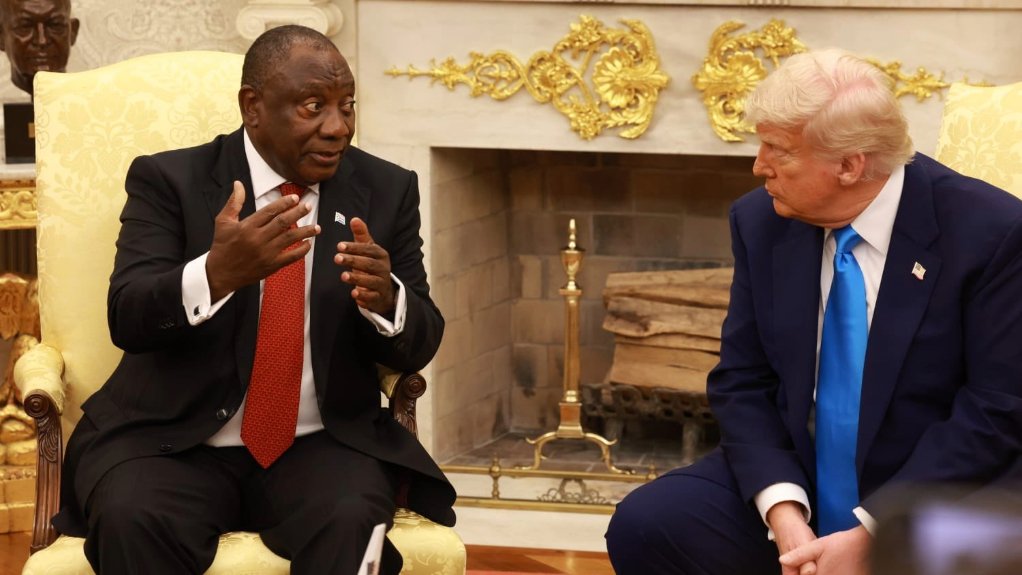
Pressure from the US to align with the west has become more explicit, particularly following the South Africa vs Israel case.
Tensions have also affected the trade relationship. In Washington, some lawmakers called for a review of South Africa’s eligibility for the African Growth and Opportunity Act (Agoa). The legislation provides duty-free access to the US market. The criticism reflected concerns that South Africa’s positions on Russia and Israel, and its broader stance of non-alignment, were increasingly seen as out of step with US foreign policy priorities.
South Africa’s Agoa benefits expired in September 2025 and were only renewed on 3 February 2026. The months of uncertainty highlighted the economic risks that can accompany geopolitical pressure.
For a country whose influence depends more on diplomacy and external partnerships, such signals matter. They show how the costs of maintaining diplomatic independence are rising in a more competitive international environment.
What needs to happen next
South Africa is unlikely to abandon its preference for mediation, multilateralism and non-alignment. The key challenge is how it sustains this approach as international pressure intensifies.
First, South Africa needs to use the institutions where it already has influence more actively. This means taking visible leadership roles in the AU and SADC, and continuing its involvement in UN peace missions. These platforms are the main channels through which the country exercises diplomatic influence.
Second, regional cooperation needs to result in coordinated action. Conflicts in places such as Mozambique or eastern Democratic Republic of Congo affect neighbouring states and cannot be managed by one country alone. Working with regional partners on joint mediation and shared responses helps avoid fragmented or competing interventions.
Third, consistency matters. When South Africa calls for international law, negotiated settlements or civilian protection, the same principles should guide its positions across different conflicts. Applying these standards evenly reduces accusations of selectivity and helps preserve trust in its role.
These priorities do not require a new foreign policy. They reflect the need to apply an existing approach more clearly and more consistently.
Written by Tinashe Sithole, Postdoctoral research fellow at the SARChI Chair: African Diplomacy and Foreign Policy, University of Johannesburg
This article is republished from The Conversation under a Creative Commons license. Read the original article.

