





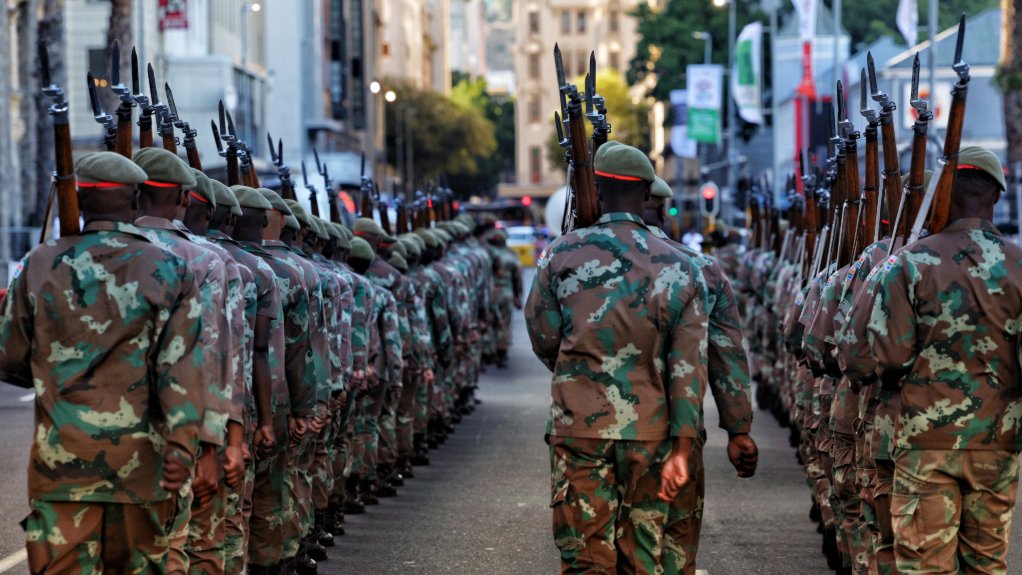
 Soldiers from the South African National Defence Force are going to be deployed alongside members of the South African Police Service to combat gangs and armed groups associated with illegal mining.
The announcement by South African president Cyril Ramaphosa in his State of the Nation address in mid-February 2026 received the support of opposition political parties, including the Democratic Alliance and the Economic Freedom Fighters.
More broadly, the decision was both praised and condemned by commentators.
I have studied militarised forms of policing for many years. The findings of my research suggest that there are both positive and negative aspects to these kinds of interventions.
There are clear drawbacks to the domestic deployment of the military in a policing role. But, under certain conditions, there have been crime reduction effects.
The history
The military have been deployed to assist the police in crime fighting (including combating gang violence) in South Africa on regular occasions since the late 1990s. It was commonplace during the 1980s in apartheid South Africa.
Examples include Operation Recoil (1997), Operation Slasher (2001), Operation Combat (2012), Operation Thunder (2018) and Operation Lockdown (2019).
The defence force was also deployed alongside the police in 2020 to enforce “hard” Covid-19 lockdown restrictions.
This situation is not unique to South Africa. Numerous countries, such as Brazil, Colombia, El Salvador, Kenya, Mexico and the US, have used their militaries for policing.
Decisions by governments to use soldiers to perform policing functions are primarily due to pragmatic and political considerations.
Police are at times not sufficiently capable of responding to specific criminal dangers due to their hyper violent nature (such as gang conflicts) or due to constraints such as a lack of resources, inadequate training and corruption.
The military sometimes takes on policing roles when a government wants to demonstrate that it is capable of containing criminal threats.
There are other reasons too for the use of soldiers in civilian settings. Soldiers have been deployed in contexts of intense rivalries between political parties. For example, policing scholars have emphasised that the US federal government’s deployment of the National Guard to Democrat-led cities (such as Los Angeles and Chicago) in 2025 and 2026 was an effort by the Trump administration to undermine the credibility of the political leadership in these cities.
My research has established that both pragmatic and political reasons have been behind the defence force’s involvement in police work in South Africa over the past 30 years. That is, in many high crime areas the authorities have had to contend with well-armed criminal groups and highly dangerous environments where there are low levels of community trust in the police.
In September 2025, the acting police minister, Firoz Cachalia, admitted that there was no practical plan to respond to gang violence in the Western Cape. Moreover, during times of elevated crime levels, government tends to frame its policing as a “war” and criminals as “enemies” on which the police and defence force must “stamp their authority”.
To date there has been no comprehensive multi-country research on the impact of military involvement in combating crime. Existing studies are based on single case analyses (such as Colombia). These studies indicate that the crime reduction effect of using the military for policing is limited.
A study on US troop deployment in Africa, Latin America and the Middle East indicates that it was associated with an increase in property crime.
Furthermore, there’s evidence that the use of the military in the “war on drugs” has led to human rights abuses. In the case of the Philippines for example, it also led to extrajudicial killings.
My research on high density policing operations in South Africa has demonstrated that deploying the military can result in the reduction of violent crime (especially murder) in targeted areas. But this is dependent on the arrest of large numbers of “wanted” criminals. And the seizure of large quantities of illegal firearms.
The domestic deployment of the defence force also increases the risk of human rights abuses. Soldiers are trained to use lethal force and are not schooled in the subtleties of police work.
This was evident during the defence force’s enforcement of the Covid-19 lockdown, when numerous allegations of abuse were reported. There was also video footage on social media of soldiers forcing people to perform demeaning physical exercises as punishment for not adhering to lockdown regulations.
My research has shown that the crime reduction effect of military deployment is temporary. Violent crime levels tend to increase in high crime areas within a year of the intervention being concluded. This has been confirmed in a study done in 2023. The reason is that police operations involving the military typically do not address the underlying societal causes of violent crime and the external sources of illegal firearms.
It’s therefore encouraging that the president committed the government to carrying out the Integrated Crime and Violence Prevention Strategy and pursuing tighter firearm controls.
Written by Guy Lamb, Criminologist / Senior Lecturer, Stellenbosch University
This article is republished from The Conversation under a Creative Commons license. Read the original article.

