





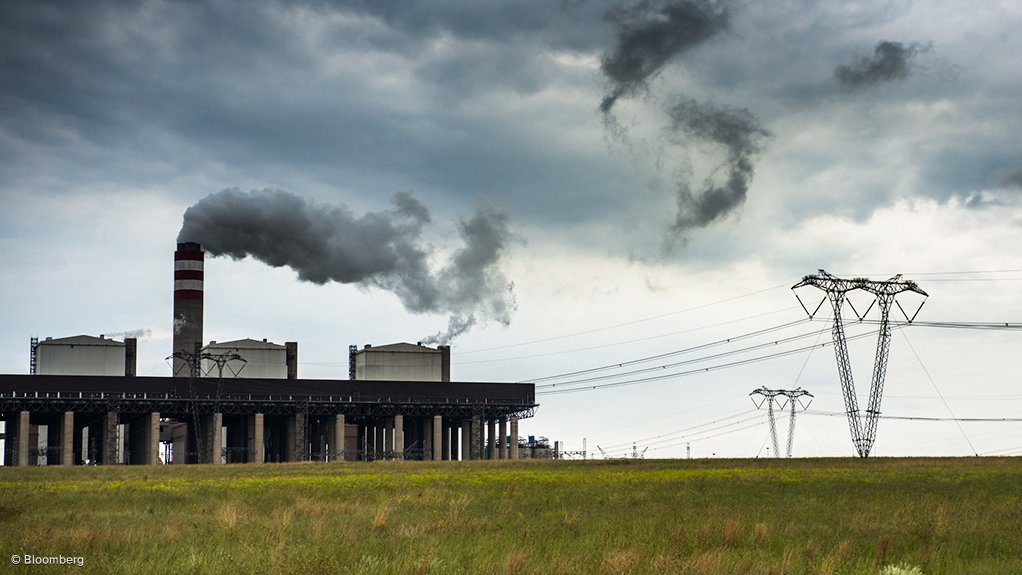
 Globally, nearly 7 000 coal mines, more than 2 400 coal-fired power plants and hundreds of coal rail networks, trucks and port terminals all make up the world’s coal industry. When coal is phased out and green energy phased in, these coal assets can either be abandoned or turned into something that is useful for communities.
Sandeep Pai and Jennifer Broadhurst researched how India, South Africa and the US are repurposing their coal assets. South Africa is moving away from burning coal to generate electricity and the research suggests that coal infrastructure could be turned into new agricultural and renewable energy hubs.
How important is coal to South Africa right now?
The South African coal value chain is vast and extensive. The country has about 108 coal mines and processing facilities. Coal is transported daily by tens of thousands of trucks. There are 14 coal-fired power plants in the country, and an entire port terminal for coal (the Richards Bay Coal Terminal).
South Africa still generates 74% of its electricity from coal. But the country is moving towards a green energy future and will be phasing out coal. The goal is net zero (zero emissions caused by humans, including emissions from burning fossil fuels) by 2050. If it achieves that, coal assets such as land, equipment, machinery and infrastructure, as well as associated skills and labour, could be stranded (not utilised or underutilised).
Why not just close down or decommission coal mines or plants?
Unplanned closures and decommissioning coal assets will have significant economic implications for workers and communities, and local regions that are heavily dependent on the coal value chain.
For example, today the coal sector in South Africa provides over 100 000 direct jobs and several thousands of indirect jobs for workers. Decommissioning of coal assets without planning will mean these jobs will disappear.
Although it won’t solve all the problems facing coal workers and coal communities, repurposing coal assets is considered a key element of a just energy transition. Within the coal sector, just transition means protecting coal workers, dependent communities and local regions from being disadvantaged by the energy transition.
For example, repurposed industries provide continuity of economic activity. If a coal mine is simply decommissioned, workers and communities lose jobs and local revenues. If the mine is repurposed for solar energy, agriculture, or other activities, some workers could find employment in the new sector.
Typically, site restoration is required before a new industry is set up, meaning the new industries also help restore the environment.
What’s the best way that South Africa can find other uses for coal assets?
Our research shows that the most promising approach would be to transform coal power stations and mining regions into renewable energy and agricultural hubs.
A renewable energy hub is a site where old coal infrastructure is reused to generate clean energy, store power and support new industries. This creates jobs and makes the most of existing roads, rail and electricity networks.
A coal site can also be repurposed to grow climate smart crops, and serve as a training facility for farmers and professionals to learn agriculture related skills. The Grootvlei Climate Smart Horticulture Centre at the Grootvlei coal power plant is an example. Eskom’s longer-term vision is to have a fully fledged agriculture hub at the power station.
These transformations must happen as part of regional repurposing strategies (rethinking the coal industry as a whole, rather than addressing just one mine or power station at a time). Mines, power plants, rail lines, trucks and ports need repurposing together to create a new industry. This is known as systems-level coal value chain repurposing.
Prospects for repurposing coal assets in India and the United States share many similarities with South Africa. In all three countries, renewable energy and agricultural value chains are possible options, though India and the United States also use approaches not yet tested in South Africa.
In India, coal mine overburden – the top soil, rock, and other layers dug out to recover coal – is being converted into much cheaper sand for construction.
In the United States, abandoned rail lines become hiking trails, creating local jobs for former coal workers and communities, often funded through mine closure laws.
Why is this taking so long in South Africa?
Based on our research, we find that coal mine and power plant repurposing is slow due to weaknesses in governance and coordination, and lack of finance. There is also no discussion or action by owners of rail networks, trucks and ports.
South African policy frameworks for repurposing are not legally binding or required under any regulations. Therefore, for coal mining companies, simply closing down is a much cheaper option.
In the power sector, the power utility Eskom prioritised repurposing coal fired power stations as part of the just energy transition. But Eskom doesn’t have the finances to do this. Currently Eskom is relying largely on external funding to carry this through but more is needed.
Significant international finance (about US$14.3-billion) has been pledged through the Just Energy Transition Partnership signed between South Africa and the International Partners Group (a network of developed countries including Denmark, the UK, Germany, the Netherlands and France that was set up to provide funds, technical expertise and political support for South Africa’s transition to green energy).
This funding is managed and coordinated by the Just Energy Project Management Unit located within the South African Presidency. But it’s been complicated to get funding approved from countries in the international group and the approval procedures are not transparent. The money has not been paid over to projects fast, causing delays.
South Africa’s Presidential Climate Commission also needs to get different government departments and coal businesses talking about a joint repurposing policy. All the different owners involved, from mining companies to trucking businesses, would need to plan together, instead of acting on their own.
Development finance is needed from domestic and international sources to take the financial risk out of investing in repurposing investments. It would also have to make sure that affected workers and communities benefited, economically and socially.
How could coal assets be creating jobs and local economic development already?
Coal mine host communities in South Africa have high levels of unemployment, and very limited access to the internet. They also have an abundance of labour skills, infrastructure and natural assets. Yet, coal mines have not been reused at any meaningful scale. Most closed sites are simply rehabilitated until the point that the land is deemed suitable for livestock grazing. Then rehabilitation typically stops.
However, a recent pilot project by mining company Glencore showed that rehabilitated mine land can be used to grow winter wheat using treated mine-affected water. This highlights the untapped potential of post-mining landscapes.
Coal mine sites can be also used for growing industrial crops such as hemp, kenaf and bamboo to support post-mining industrial development, generating value across sectors like textiles, construction and bioenergy while also helping to rehabilitate polluted land.
Hemp value chains are another option, with hemp grown on former mine sites, and power plants used to process the plant into textiles and building materials. The finished products can be transported using former coal transport networks.
A true just transition for coal communities is one that does not make past inequalities worse.
Written by Sandeep Pai, Senior Lead, International Energy Transitions and Executive in Residence, Duke University and Jennifer Lee Broadhurst, Professor emeritus, University of Cape Town
This article is republished from The Conversation under a Creative Commons license. Read the original article.

