





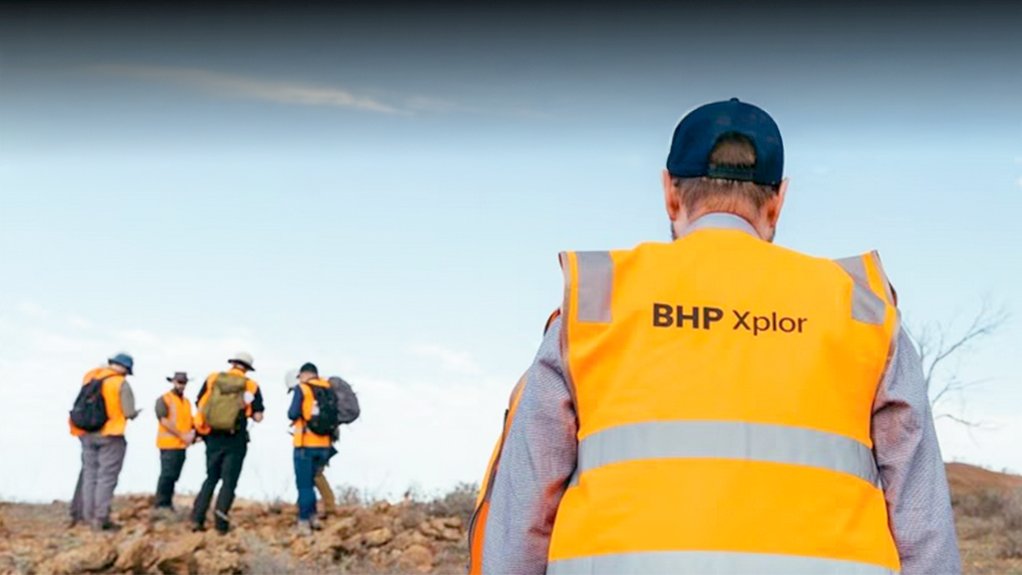
JOHANNESBURG (miningweekly.com) – South Africa is hosting the most intensive mineral systems thrust ever conducted by the exploration advancement programme being innovatively implemented by major mining company BHP.
Brought together under the Xplor banner are junior exploration companies, geoscience organisations, and technology teams that collectively span the currently crucial discovery system.
Selected for this year’s BHP Xplor are ten early-stage exploration and technology companies, making it the programme’s largest-ever cohort.
Moreover, it is also the first time ever that a BHP Xplor bootcamp has been conducted outside of Australia or Canada.
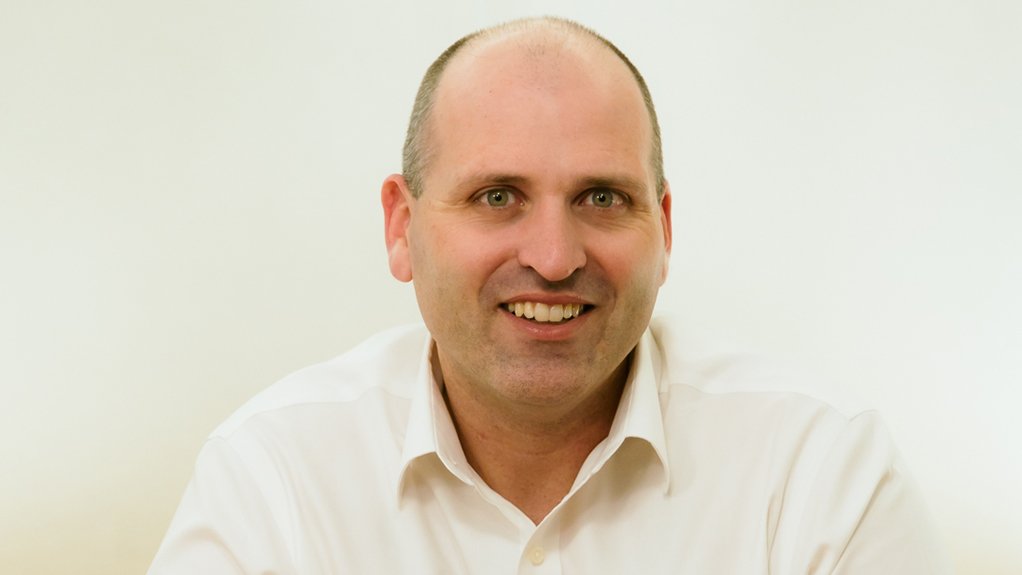
“We're really excited about being here,” BHP group exploration officer Tim O’Connor enthused to Mining Weekly from Cape Town.
“The cohort is with us here. I've got most of my leadership team here. Hopefully most of them will go to Mining Indaba next week, meet some of the vendors to understand the local environments that we have here and across Africa, which will be very exciting.
“But this week, we've come together to talk about things like geology. We'll talk about our view of mineral systems that we've got from our work around the world. We talk about business strategy and how we run programmes safely and sustainably.
“Later on, we'll bring the cohort together, and we'll talk about things like external networks and vendors and introduce members to the sorts of partners that they might need, the sorts of vendors they might need to accelerate. Lastly, at the end, we'll talk about scaling up. These aren't just ideas and explorers; these are companies that need to know how to sustain through the long term.
“We work with them, and they work with each other to help to define what scaling up actually looks like, and how do they move faster.
“Working collectively is what helps to make the programme successful. By the end of it, we know that we wouldn't have had that idea ourselves and put some money into it to see if we can accelerate the idea further through drilling or geophysics, or what have you, and we're still working through the beginning parts of the first few cohorts right now.
“What also makes this year special is that we have a company from South Africa. We’re pleased to be partnering with Orion Minerals on the ideas they have within the Northern Cape, and looking at older geology in new ways, bringing some of our expertise. Orion’s technical depth in the region is something that we're excited to explore together over the next nine months,” O’Connor explained.
As part of the programme, a number of Orion’s South African exploration project companies will receive an aggregate equity-free grant of $500 000, access to BHP’s technical specialists, and structured support to advance geological concepts at the company's Northern Cape exploration projects in South Africa.
What is very interesting is that the possibility of deeper copper-centric metal systems in South Africa’s Northern Cape will be intensively probed.
Orion is advancing a portfolio of copper and zinc assets in South Africa’s Northern Cape and through Xplor, it will have the chance to apply modern data analytics and innovative mineral systems thinking across its large tenement package, which could assist the company to identify new discovery opportunities beyond known deposits.
O’Connor made strong reference to the quickly evolving nature of exploration and highlighted that new tools, better data, and different ways of working are changing how early-stage ideas are tested and refined.
He spoke of this year’s cohort reflecting that shift while bringing together explorers and technology developers who are approaching discovery in thoughtful and practical ways.
“Xplor gives us a valuable opportunity to learn alongside them and explore what discovery could look like in the future. We know the role that juniors play in terms of a healthy ecosystem of discovery and one of the challenges we're seeing even now with high metals prices, is a junior sector that is struggling to get funding, as well as a funding model that tends to reward small deposits, so effectively staying on the treadmill of funding and doing what benefits near-term returns for shareholders, and that's a challenge that juniors have,” O’Connor explained.
“The goal of the equity-free $500 000 and the reason why it is equity free is because this is an idea that a junior is bringing, and what we want them to do is be able to get off that funding treadmill for just a little bit, to be able to sponsor them, and to them we can bring our geologic expertise, our technologies, our connections, and we can work together to move the needle on something that otherwise never would have gotten the light of day.
“Again, the $500 000 is designed to be equity free within that space, so we can have that conversation. I should say, though, if, in fact, there’s a partnership opportunity when we get to the end of it, then we would move towards a more traditional earning-type model in the $10-million to $20 million work programmes within that space. We've done that with a good number of the companies that we've had to this point,” O’Connor outlined.
Mining Weekly: Are your $500 000 equity-free, non-repayable grants aimed at speeding up known discoveries or for discovery itself?
O’Connor: These are for discovery itself and the focus is on concepts that have the potential to bring scale and discovery. The large, long-life, high-quality deposits that BHP is after are not easy to find. They require new ideas and that's what the funding is all about. It is to get away from the known and to bring ourselves into some of the unknown. In the case of Orion, in South Africa’s Northern Cape, it's about asking if deeper copper-centric metal systems are potentially present that can be scaled up.
How many early-stage accelerations are under way?
Around 31 to date including the latest 2026 cohort. We've done partnerships on a little less than 50% of them to this point, we're still working through the back-end of last year's cohort. Based on concepts, we're doing big regional studies, and we’re in the process of drilling some of those. The accelerant is for discovery as a whole. The way we accelerate within incubators is we bring the cohort together several times.
Whose artificial intelligence know-how is used most within Xplor?
That’s a really tough one to answer. Getting to artificial intelligence begins with data and we're somewhat agnostic when it comes to artificial intelligence. What we do believe in is leveraging as much data as we can, bringing that together, and then making sure that we're using that in a mineral systems way. Its geological accuracy that is really important and that's what we try to espouse. We structure much more around the data itself.
Why did you only get to South Africa in 2026?
To a degree, it depends on the applicants and what is fascinating is that we saw a significant increase in applicants in South Africa this last year. I think part of that has been the resurgence of metals. When we saw Orion come through, we were really excited. Orion’s talent and knowledge of the Northern Cape was fascinating and that made this a natural time for us to bring in South Africa. This is also our biggest cohort and a chance for us to expand the programme built over the past few years. We're really excited about being here this year, and so much so that we've decided to locate our bootcamp here in Cape Town this year. This is actually the first time that we've put our Xplor bootcamp anywhere but in Australia or Canada.
What are examples of new exploration tools that are needed?
Exploration needs to evolve. Everything we haven't found is more difficult than what's been found in the past. The sorts of tools that we’re looking at here stem from the fundamentals and there are four themes of innovation that we bring to exploration from a BHP perspective. The first is around geology itself, around mineral systems. We are actively advancing the science of where and how copper deposits form, which is something that still has some way to run. This is fundamental research being done by universities and partnerships so that we can understand those algorithms and the thinking of how copper forms. The second tool that really needs to advance is data. We believe data is the single biggest source of latent value that we have right now, legacy data and leveraging it. But it has to be digitised. You have to be able to ingest it, and you’ve got to be able to leverage it in large language models with the help of artificial intelligence. You need to make sure that you capture as much data as you possibly can. The third tool is technology itself, detection tools, so we either believe in partnering, as we have, with some other companies, around their detection technologies, or developing some of our detection technologies themselves, around how we can accelerate different detection techniques. One of the things I'm excited about at BHP is that we have shot the largest 3D seismic surveys, hard rock seismic surveys, something that's been done in oil and gas for a long time. We have shot the largest one of those across some of our assets in South Australia and elsewhere. Then the last bit of innovation that's super important is innovation around partnerships, different types of partnerships. Our oil and gas cousins did this some time back in terms of partnerships.
What constitutes a typical cohort?
The cohorts actually evolved quite a bit from the first year to where we are now. The first cohort had seven and they were all junior companies that did exploration, and you'd imagine that partnership, that cohort, to work together on their problems, and in areas where there's non-direct competition. That cohort has evolved significantly to where it is now, where we have both junior explorers, even some slightly larger explorers as well, not just small caps, but some that are slightly bigger, straight on into technology companies, straight on into a government survey in the state of Utah, all working together. The interesting thing is, you can imagine the business strategies that are formed. They're all a little bit different, but each of them is learning from each other, challenging each other, and their networks become their cohorts networks, and that helps, then drive that discovery. We often talk about exploration as being one of the most competitive places because finding resources is one of the most important things we can do and Xplor is one of the programmes that we have to help us to try different models of cohorts and partnerships. To your final question, what does Orion bring to it? Quite a bit. They've got a depth of experience, certainly here in South Africa. They've obviously got a depth of experience across the value chain. They understand the geologic systems in the Northern Cape quite well. And I think that's something that as they talk to companies who might be in Australia or in Canada, they can compare and contrast both exploration styles, how it works, and all of that then materially advances their projects, programmes and their chance of making a big discovery.
So, what’s the big takeaway?
The big takeaway is the world needs more critical minerals. The world needs more copper. We're going to need to figure out new partnerships, new models, new technologies, to make some of these discoveries. Whilst I'd say there's been no more difficult time to be in exploration, if the goal is discovery, there's also been no more rewarding time to be in exploration in terms of the importance right now across a number of environments, a number of big societal shifts, and that future only happens if we work differently with partnerships such as Xplor and incubators like Xplor to drive discovery. So, we're super excited about this cohort, about where we are, and about the prospectus that we have, not just in South Africa, but across the rest of the continent, and then, of course, globally. But it is going to require a different way of working and different partnerships to be successful.
NINE OTHER COMPANIES
Other than South Africa’s Orion, the nine other companies that make up this year’s cohort are:
FrontierX of Canada, which is an early-stage uranium exploration company in Canada, formed by two BHP Xplor year-one alumni, Fabian Baker and Andrew Tunningley. Through Xplor, FrontierX is undertaking a preliminary uranium project, focused on testing early geological concepts and building an initial understanding of exploration potential.
Litchfield Minerals of Australia, which is an exploration company advancing copper, zinc, lead, silver and gold opportunities in the Northern Territory. Through Xplor, the company is focusing on its Oonagalabi project in the Arunta region, applying modern geophysics and targeted fieldwork to build a clearer picture of a large, underexplored mineral system.
Otrera Resources of South America, which is an early-stage exploration company focused on sediment-hosted copper systems. Its Xplor project is centred on advancing new copper targets, drawing on the team’s deep regional experience and modern geochemical and geological approaches.
PT GeoFix of Indonesia, which is a multidisciplinary geoscience consultancy supporting mineral exploration across Southeast Asia. Through Xplor, GeoFix is applying its proprietary prospectivity tools and regional expertise to test new porphyry copper/gold exploration concepts in underexplored parts of the Sunda-Banda Arc.
Utah Geological Survey of the US, which is the State of Utah’s primary geoscience organisation, providing authoritative geological data and scientific insight to support resource management and exploration. Through Xplor, Utah Geological Survey is leading a regional mineral systems analysis across the eastern Great Basin, integrating new datasets and targeted fieldwork to improve understanding of mineral potential and make high-quality geoscience data publicly available.
The cohort’s technology companies are:
RadiXplore Australia, which is a technology company using artificial intelligence to analyse historical exploration records alongside modern geological and corporate data. Through Xplor, RadiXplore is applying its artificial intelligence platform to copper exploration, testing how legacy data can be re-interpreted to surface overlooked opportunities and support earlier, more informed discovery decisions.
Mineural of Canada, which is deep-tech company using artificial intelligence to help exploration teams identify and prioritise mineral targets more efficiently. Through Xplor, Mineural is applying its artificial intelligence platform, IRIS, to copper exploration, combining machine learning with BHP’s geological expertise to test how artificial intelligence can support earlier, more responsible discovery decisions.
VectOres Science, which is a US-based mining technology company developing non-invasive hydrogeochemical and isotopic tools to support mineral exploration. Through Xplor, the company is applying its water and isotope chemistry platform to test how real-time primary data can help identify and prioritise mineral systems earlier, without reliance on initial drilling.
Discovery Genomics of Canada, which is a Vancouver-based technology company developing DNA sequencing as a new tool for mineral exploration. Through Xplor, the company is advancing its genomics platform for copper exploration, testing how microbial DNA signatures can help identify buried mineral systems in covered and complex terrains.
DIFFERENT APPROACH
As is well known, the discovery rate not just in South Africa but globally, for large copper in particular, is a far cry from what it has been historically or what it probably needs to be now to fulfill long-term demand, so taking new approaches to exploration is something that is viewed by O’Connor as being “very, very important”.
“What we love about Xplore is that it's a bit of an incubator. It's a different approach to exploration,” O’Connor emphasised in the interview with Mining Weekly.
EMAIL THIS ARTICLE SAVE THIS ARTICLE ARTICLE ENQUIRY FEEDBACK
To subscribe email subscriptions@creamermedia.co.za or click here
To advertise email advertising@creamermedia.co.za or click here

