





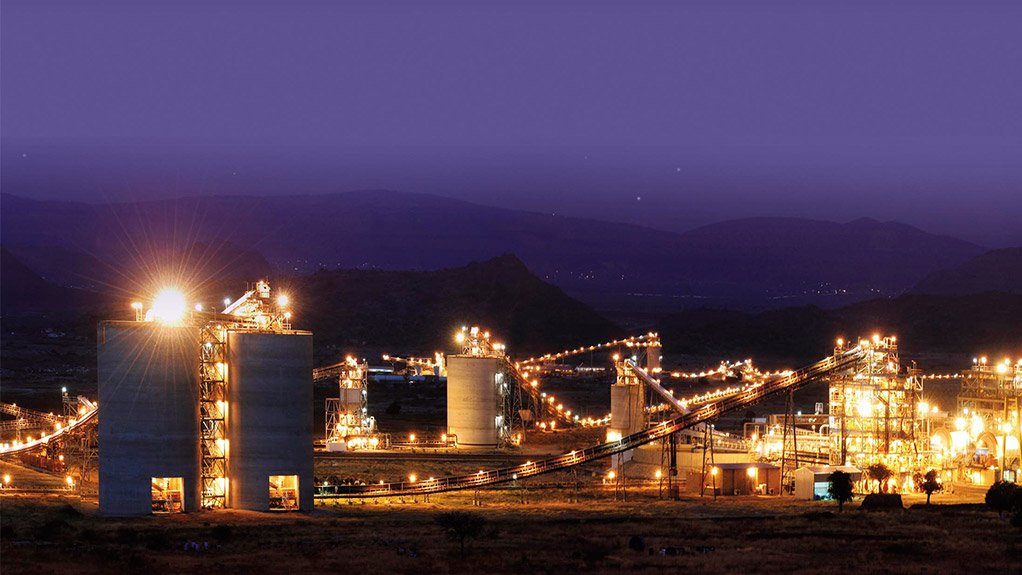

JOHANNESBURG (miningweekly.com) – Platinum group metals (PGM) mining company Implats is looking at solar for the Marula PGM mine and also the Impala Rustenburg operation, the company reported during a media roundtable on Thursday, March 5.
This follows Implats’ renewable electricity supply agreement with Discovery Green, which will supply up to 90% of Impala Refineries’ electricity demand through a combination of solar and wind generation. First Discovery Green power is expected in the second half of the 2026 calendar year.
Regarding green power for Marula and Rustenburg, Implats said in response to Mining Weekly’s question that the plan no longer involved the company itself building solar facilities.
“We’ve shifted the model a little bit. We're not now looking to build our own facilities. We look at wheeling agreements, as you have seen what we’ve done with Discovery Green for our refineries. So, for Rustenburg and Marula, we're looking for the same kind of arrangement,” roundtable media attendees were informed.
“Discover Green’s still part of the pool of people we’re talking to but for Rustenburg, we’re speaking to Royal Bafokeng – they are keen to undertake that type of a project with us guaranteeing an offtake agreement with them. So, we are speaking to several players in industry," Implats added in response.
For Rustenburg about 50 MW is being sought and for Marula about 30 MW.
As reported by Mining Weekly last month, Discovery Green on January 27 signed a five-year power purchase agreement with Implats. The electricity will be sourced from multiple wind and solar facilities that are being advanced to construction by independent power producers (IPPs) in various South African provinces, with the first wheeled electricity for Implats expected by the end of 2026.
Discovery Green is entering into exclusive procurement contracts with the IPPs (mostly wind generators) with the intention of supplying the electricity to multiple customers pursuing both decarbonisation objectives and price-path certainty.
The Scope 2 greenhouse-gas emissions at Implats’ refinery in Springs are expected to be reduced by more than 852 000 t CO2e per year over the period, with 130 000 MWh of electricity delivered yearly at a tariff that is decoupled from Eskom’s rising tariffs.
ZIMBABWE
In Zimbabwe, Zimplats' first 35 MW of its intended 185 MW solar power complex reached design capacity during the half-year, and construction has commenced on the $54-million, 45 MW second phase of the Zimplats solar project, which remains on track for technical completion in August 2026. Once commissioned, the plant will supply an additional 110 GWh of renewable energy annually and reduce emissions by 69 396 t CO2e per year.
Renewable electricity use remained steady at 31% against a target of 35%, as prolonged droughts in Zimbabwe and Zambia continued to constrain hydropower supply from Zambian national power utility Zesco.
Despite a moderate rise in electricity consumption associated with commissioning the Zimplats smelter, both scope 1 and 2 carbon emissions of 1.66 t CO2 per six-element (6E) ounce and energy use of 8.08 GJ per 6E ounce were largely unchanged compared with the prior period, owing to increased 6E output.
EMAIL THIS ARTICLE SAVE THIS ARTICLE ARTICLE ENQUIRY FEEDBACK
To subscribe email subscriptions@creamermedia.co.za or click here
To advertise email advertising@creamermedia.co.za or click here

