





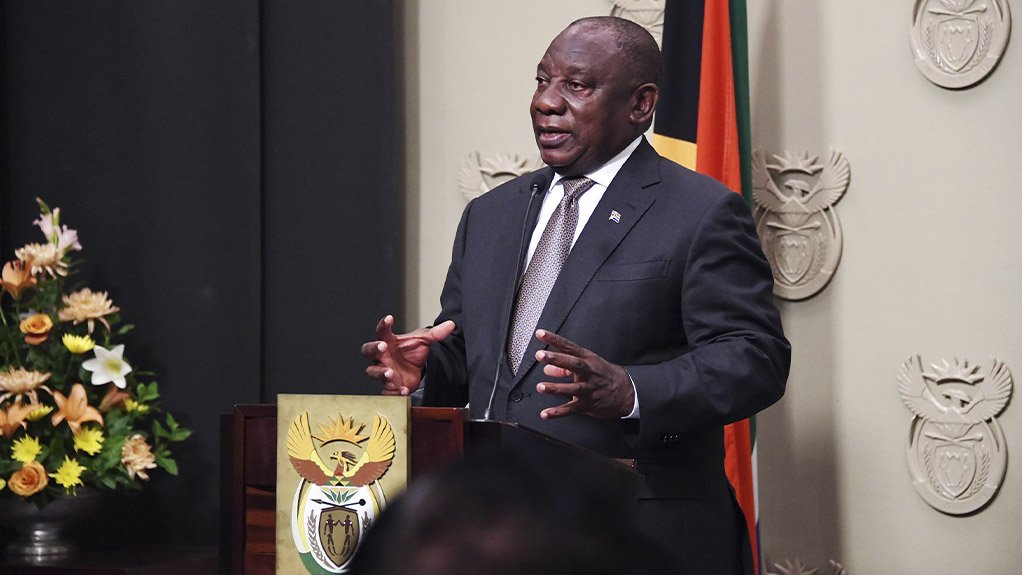
As South Africa continues to observe 16 Days of Activism against Gender-Based Violence (GBV), President Cyril Ramaphosa expressed disappointment at the high levels of violence against women and girls, stating that a national disaster demanded a national response.
Last month, government called for “exceptional measures” in this endeavour.
Ramaphosa called on communities, civil society, government, faith leaders, business, unions and citizens to play their part in ending GBV.
“We must be part of dismantling the attitudes that sustain violence against women and children by our own actions. We must report such crimes instead of looking away or regarding it as not our business.
“The safety and security of women and children is everybody’s business. Let us continue to work together as all of society to realise a society free from gender-based violence and femicide (GBVF),” he stated.
Ramaphosa pointed out that the classification of GBVF as a national disaster enabled faster emergency resource allocation for survivor services, enhanced monitoring and reporting mechanisms, and strengthened oversight.
There will be expanded access to shelters, safe spaces, psycho-social counselling and community-based prevention programmes.
He pointed to the 2022 National GBV Study conducted by the Human Sciences Research Council (HSRC), which revealed that more than 35% of South African women aged 18 and older had experienced physical or sexual violence in their lifetime. In most of these cases the perpetrator was an intimate partner, he said.
“The HSRC study was the first of its kind to provide the baseline data needed to support our efforts to combat GBVF. It was mandated by the National Strategic Plan (NSP) that emanated from the first Presidential Summit on GBVF we convened in 2018,” he explained.
During the Covid-19 pandemic, Ramaphosa characterised violence against women as a second pandemic.
“…but its impacts are arguably even more corrosive. GBV destroys families, has an economic cost, causes instability and fear for women and girls, and reproduces inter-generational trauma,” he said.
Ramaphosa said classification as a national disaster strengthened the mandates of the respective government departments, such as Social Development, Justice and Constitutional Development, Health, Police and Basic Education, to tackle GBVF.
Ramaphosa said all affected organs of State would be required to submit progress reports to the National Disaster Management Centre on the actions they were taking.
Government would also be accelerating prevention programmes targeting men and boys, he stressed.
“I have called for a concerted, sustained nationwide programme of dialogues with men and boys to engage openly on what is driving this pandemic, and what must be done to arrest it.
“We must engage honestly about the toxic masculinity, cultural norms, peer pressure, social dynamics and socialisation that is turning men and boys into abusers of women and children,” he said.
Ramaphosa highlighted that even as government had made progress on the NSP, implementation remained uneven.
“By classifying GBVF as a national disaster, we will be able to speed up resource allocation and funding flows to support survivors and improve access to justice. We will be able to support law enforcement agencies and the judiciary to expedite the management and processing of GBVF-related cases,” he said.
EMAIL THIS ARTICLE SAVE THIS ARTICLE ARTICLE ENQUIRY FEEDBACK
To subscribe email subscriptions@creamermedia.co.za or click here
To advertise email advertising@creamermedia.co.za or click here

