





- SA reconciliation barometer4.27 MB
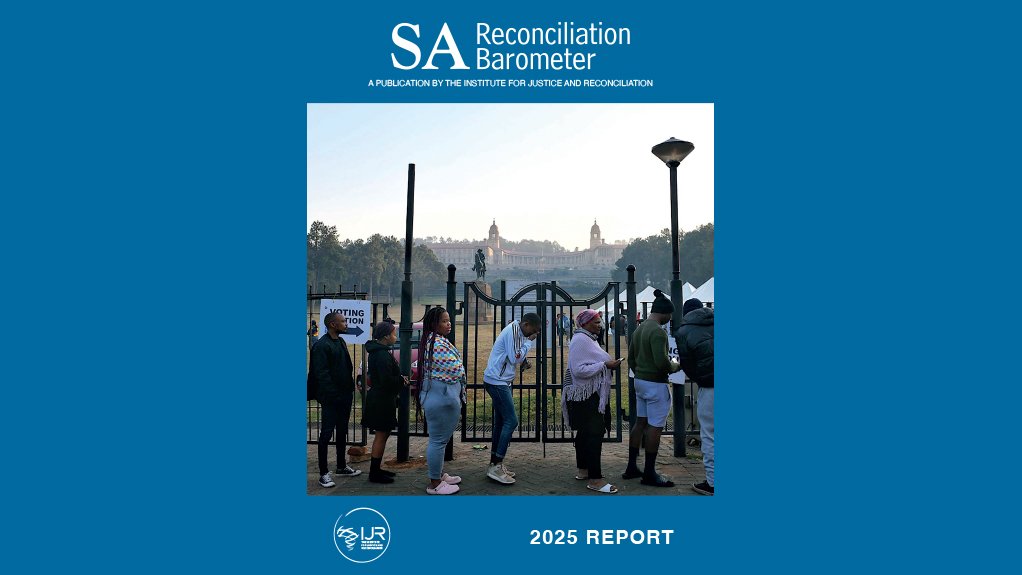
The 2025 South African Reconciliation Barometer (SARB) was conducted one year into the first term of the Government of National Unity (GNU), following the African National Congress’s (ANC) loss of its outright majority in the 2024 national elections.
This represented a historic shift from single-party dominance to a multiparty national coalition. Acceptance of the 2024 election results after a spate of political violence affirmed citizens’ enduring commitment to constitutional democracy and national reconciliation.
However, the survey found that public attitudes remained broadly similar to those in 2023: South Africans continued to report low confidence in political leaders and institutions, modest assessments of change since 1994, and deep concern about poverty, inequality and exclusion.
Across the Barometer’s six dimensions, results pointed to persistent structural and social fault lines. Confidence in political parties and many public institutions remained low and external political efficacy was weak. Many South Africans felt that national leaders neither listen to nor act in the interests of ordinary people. Socio-economic exclusion remained a central concern: levels of lived poverty were high, black South Africans continued to experience significantly greater deprivation than white South Africans, and relatively few people believed that job opportunities, economic inequality or their own household and financial circumstances had improved.
While national identity remained strong, interpersonal trust was low outside of close family and neighbours. Interaction and deeper relationships across historically defined race lines were concentrated among affluent urban groups, and the gap between rich and poor was again identified as the country’s main source of division and greatest barrier to reconciliation.
At the same time, the Barometer also found some important areas of resilience and cautious optimism. Large majorities still regarded being South African as central to how they see themselves and to what they want for their children, and most believed that a more united country was both desirable and achievable.
Consensus on the core truths of apartheid and recognition of its enduring harms remained broad, and there was continued support in principle for land reform, a racially representative workforce and reparative justice for victims of apartheid abuses.
Public evaluations of the GNU and key policy initiatives were mixed, including National Health Insurance (NHI) and the National Dialogue, suggesting some willingness to allow time for the coalition to demonstrate results.
Looking ahead to the 2026/27 local government elections, the findings pointed to four priority areas for the GNU, political parties and broader society:
- Rebuild trust in institutions and leadership, including through greater responsiveness and transparency.
- Deliver measurable progress on poverty, unemployment and inequality, addressing the profound material divides that South Africans consistently identify as the primary source of division and the main barrier to reconciliation.
- Deepen social cohesion beyond shared identity, including through strengthening historical understanding among younger generations and advancing reparative and restorative justice.
- Renew hope for the future by showing that the country can deliver improvements in people’s lives, strengthening both reconciliation and democratic participation in the years to come.
Report by Institute for Justice and Reconciliation
EMAIL THIS ARTICLE SAVE THIS ARTICLE ARTICLE ENQUIRY FEEDBACK
To subscribe email subscriptions@creamermedia.co.za or click here
To advertise email advertising@creamermedia.co.za or click here

