





The Presidency’s Rudi Dicks, who is overseeing the economic reforms being implemented under Operation Vulindlela, says the unbundling of Eskom’s transmission business cannot be done “half-heartedly” if South Africa is to introduce the competition needed to help improve electricity affordability.
Speaking during a panel discussion hosted by Bowmans on the financing of South Africa’s just energy transition, Dicks expressed his support for the full unbundling of the transmission business and assets from Eskom Holdings.
He argued that this was necessary in light of the importance of the grid, and the expansion of the transmission infrastructure, to the introduction of new private generation capacity and to ensuring that transmission investments did not favour the “incumbent”.
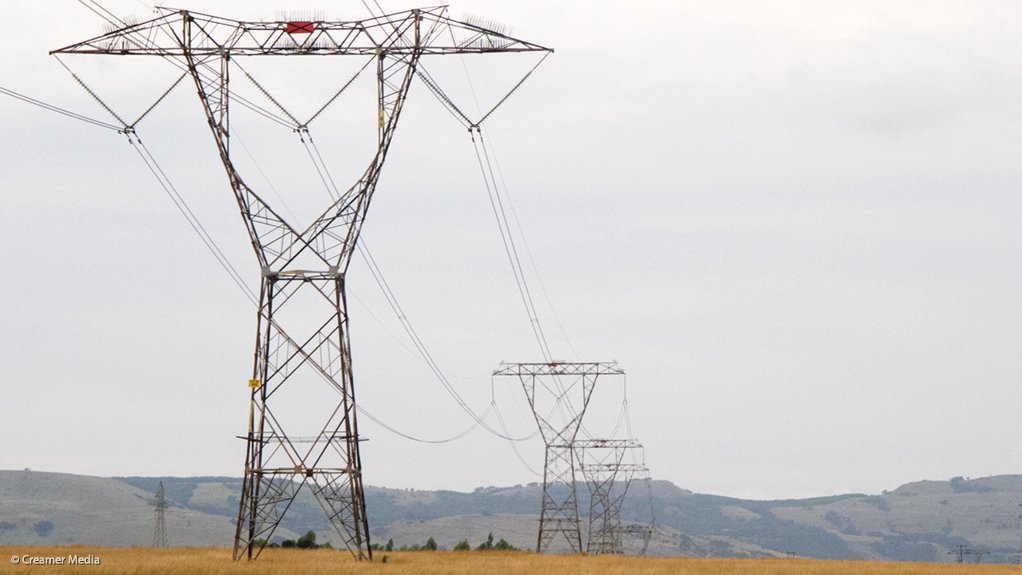
“You’ve got to unbundle Eskom [and] not half-heartedly. You’ve got to unbundle it so as to be able to utilise the transmission assets to allow for investments in renewables, hybrid, gas, and others to be transmitted across the grid.
“If we allow the existing transmission assets to remain [with Eskom Holdings], what will happen is that investment in transmission will be for the incumbent,” he said, arguing that this was not a criticism of Eskom but a lesson from how both public and private incumbents operated globally when allowed to do so.
He added that the high price of electricity had emerged as the key challenge facing consumers and that competition, including public sector competition in the form of Eskom Green, held the most promise for addressing the problem of affordability.
In December, a revised unbundling strategy was approved for Eskom Holdings.
Under the announced structure, the National Transmission Company South Africa (NTCSA) will remain a subsidiary of Eskom Holdings and will continue to own the transmission assets, while a separate Transmission System Operator will be set up outside Eskom to handle system and market operation, but without owning the underlying infrastructure.
The approach has been criticised by Professor Anton Eberhard, of the Power Futures Lab at the University of Cape Town’s Graduate School of Business, who argues that it is not supportive of the accelerated investment needed to ensure security of supply, particularly with various coal stations being retired in 2030.
South African Photovoltaic Industry Association CEO Dr Rethabile Melamu has also expressed concern about whether NTCSA will be able to secure the funding needed for new grid investment, as well as whether there will be non-discriminatory treatment of Eskom Generation when compared with independent power producers.
When announcing the new strategy, however, government indicated that it was aimed at preserving the financial stability of the Eskom Group by minimising disruptions to its highly leveraged balance sheet.
EMAIL THIS ARTICLE SAVE THIS ARTICLE ARTICLE ENQUIRY FEEDBACK
To subscribe email subscriptions@creamermedia.co.za or click here
To advertise email advertising@creamermedia.co.za or click here

