





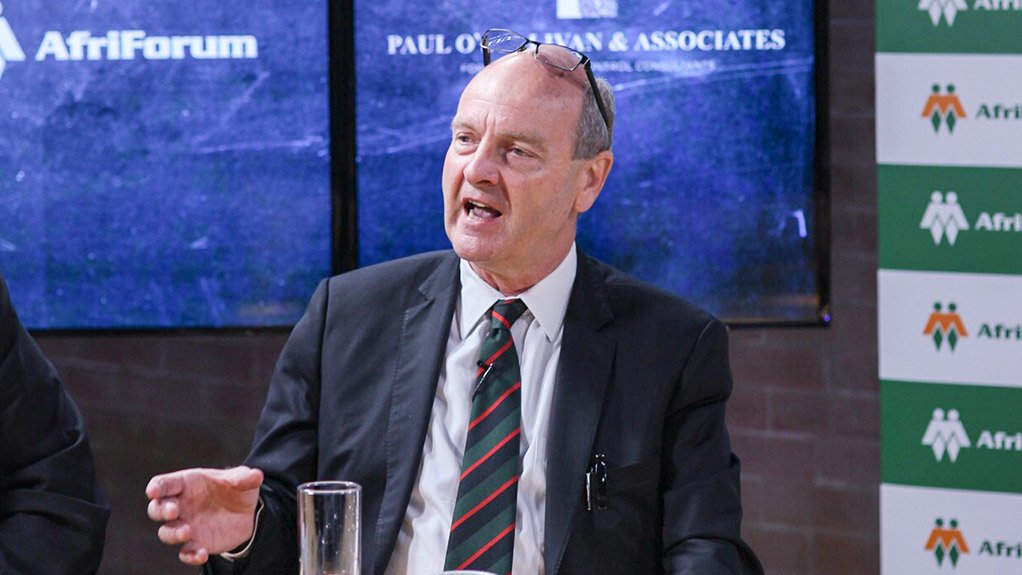
Forensic analyst Paul O’Sullivan will on Tuesday physically appear to testify before the Ad Hoc Committee established to investigate allegations made by the South African Police Service’s (Saps’) KwaZulu-Natal Provincial Commissioner, Lieutenant-General Nhlanhla Mkhwanazi.
This after National Assembly Speaker Thoko Didiza refused to issue subpoenas for O’Sullivan and businessman Brown Mogotsi, urging for continued engagements.
O’Sullivan had offered to testify from a South African embassy but refused to appear in person, citing alleged death threats, while Mogotsi refused to appear unless Parliament funded a private security detail of his choice.
This after other witnesses testifying in the parallel Madlanga Judicial Commission of Inquiry into Alleged Criminality, Political Interference and Corruption in the Criminal Justice System were assassinated or had attempts made on their lives.
Last week, Didiza requested that the committee properly engage with the reasons given by both witnesses for wanting to testify remotely and show how those concerns were considered and addressed.
The Speaker wanted evidence of whether O’Sullivan’s application to appear virtually was formally tabled, and whether members considered his reasons, including his location abroad and security concerns.
She also wanted to know if a reasoned and legally justifiable decision was reached and properly recorded; whether Mogotsi’s security concerns were formally tabled and considered; whether the nature and credibility of the risks he raised were assessed; if the reasonableness of proposed security measures was evaluated; and whether any threat or risk assessments were considered.
On Monday, Didiza welcomes the Ad Hoc Committee’s continued engagement with Mogotsi and O’Sullivan, following her guidance that further substantive engagement be pursued before resorting to the issuing of summonses.
She reiterated that her guidance to the Committee to continue engaging substantively with the witnesses was aimed at ensuring that the Committee’s work proceeds in a manner that is “lawful, procedurally fair, and capable of withstanding constitutional and judicial scrutiny”.
Didiza affirmed that the Ad Hoc Committee’s decision to pursue further engagement with the witnesses—without immediately resorting to summonses—was correct and consistent with constitutional and procedural requirements.
She highlighted that a summons issued without meeting the necessary legal threshold would not have withstood judicial scrutiny and could have weakened, rather than strengthened, the committee’s work.
Engagements are continuing with Mogotsi and should they not yield the necessary outcome, the Speaker will be advised by the Ad Hoc Committee so that the issuing of a summons may be considered.
EMAIL THIS ARTICLE SAVE THIS ARTICLE ARTICLE ENQUIRY FEEDBACK
To subscribe email subscriptions@creamermedia.co.za or click here
To advertise email advertising@creamermedia.co.za or click here

