





The story of Mpumalanga has always been told in images of contrast. A province of soaring escarpments and deep coal seams. A place of the rising sun where too many young people still end their day without work, and too many households still wait for dignified services. As Premier, I am acutely aware that we govern in an age of low trust, tight public finances and rising expectations. Citizens no longer measure us by the speeches we deliver but by the lives we change. That is why the central task of this administration is simple to state but difficult to achieve. We must turn Mpumalanga from a province that copes into a province that competes.
This year’s State of the Province Address was not only an account of what we have done in seven months. It was a signal of how we intend to govern over the next five years and beyond. The decisions we take now will shape the province well into the 2060s. Our focus is on a future where opportunity is expanded, infrastructure is rebuilt with speed and integrity, and governance earns public trust through delivery.
A province that refuses to normalise youth unemployment
Unemployment remains the single most urgent challenge facing our province and our country. Youth unemployment in particular threatens to undermine social stability and aspirations for shared prosperity. Behind each statistic is a young person who has done everything asked of them, yet still struggles to take their first step into productive work. That is why we are recalibrating the economy to work for the majority. Our Premier’s Youth Development Fund has invested in youth owned enterprises that are building new value chains in rural and township economies. At the same time, we are ensuring that education becomes a direct pathway to opportunity. New boarding schools, a school for learners with disabilities, the expansion of digital access, and the provision of tablets from Grade 10 are all intended to unlock a new generation of skilled and confident young people. Every decision this administration takes will be filtered through one fundamental question: does this expand meaningful opportunity for young people in Mpumalanga?
The quiet revolution in our classrooms
Progress is not always announced with sirens. Sometimes it arrives quietly, through discipline, belief and the steady insistence that improvement is possible. One of the clearest signs that Mpumalanga is moving forward is found not in a boardroom or a budget speech, but in the determination of our learners and teachers across the province. In a country where educational outcomes often reflect deep inequality and limited opportunity, our matric results are telling a different story, one built on resilience and upward momentum.
Mpumalanga’s matric pass rate has grown from 77% in 2023, to 84.99% in 2024, and now 86.5% in 2025. That is not a miracle. It is a journey. It is the story of young people choosing to push through pressure, of families holding the line through difficult circumstances, and of educators who continue to do more than teach, they keep hope alive. We celebrate these results not as a finish line, but as evidence that Mpumalanga is rising, one learner, one classroom, one school, one community at a time. Because when the pass rate improves, so does the province’s confidence in itself. And when young people succeed, the future stops being a promise and starts becoming a plan.
From coal heartland to energy transition laboratory
Mpumalanga has long powered South Africa. Our mines and power stations have fuelled growth for decades, sustaining local businesses, household incomes and entire communities. That legacy is one of both pride and responsibility. Coal remains central to jobs, supplier networks and the economic heartbeat of the province, and it must be protected through stability, reinvestment and responsible operations. As the world moves toward cleaner and more sustainable energy, we will ensure that the communities that have kept South Africa’s lights on are not left behind. We embrace a Just Energy Transition that is responsible and fair, focused on innovation such as carbon capture and solar energy, and on converting existing skills into new capabilities. The revitalisation of the Nkomazi Special Economic Zone, supplier parks and industrial technology hubs are building blocks for a province that continues to supply energy in ways that are globally competitive and climate conscious. A just transition must not be a story of loss. It must be a story of reinvention.
Infrastructure as a social contract
Infrastructure is not concrete and steel. It is dignity. It is access. It is hope. When a parent no longer wakes before dawn to queue for water, when learners reach school safely over new bridges, when a grandmother receives care in a modern hospital, the meaning of progress becomes tangible. In seven months we have completed projects that had been deferred for years. The Middelburg Hospital is now a reality. Clinics and schools have opened their doors. Bulk water schemes are advancing. Roads and bridges are being upgraded to connect local economies. Yet the scale of need remains large. This is why we are unlocking new models of partnership. The recent collaboration on the P171 road is an example of how government and private enterprise can work together to transform infrastructure faster and more cost effectively. A capable state does not act alone. It acts decisively with others.
Tourism and agriculture as engines of inclusive growth
Our province is home to some of the most breathtaking natural and cultural treasures found anywhere in the world. But tourism will only reach its full value when it is underpinned by modern infrastructure, safety, connectivity and unique visitor experiences. The cable car planned for Mariepskop, the skywalk at God’s Window, water based attractions and the development of an international conference centre will position Mpumalanga as a premier leisure and business tourism destination. Agriculture is another of our great strengths. The operationalisation of the Mpumalanga International Fresh Produce Market will link thousands of small farmers to formal supply chains, while our proposed Nutrition Sourcing Bill will ensure that state nutrition programmes uplift local producers. When we invest in our people’s inherent strengths, we build an economy that is resilient and rooted in local participation.
A capable and ethical state
Our administration has prioritised rebuilding the capacity of government. We have filled critical vacancies, strengthened project management oversight and deepened cooperation across all spheres of government. We are improving governance in municipalities so that basic services are delivered consistently and financial sustainability is restored. We will measure progress not only through compliance and audits, but through the trust communities place in their government.
Delivering by doing
Over these first seven months, we have demonstrated a new culture in government. Clear commitments backed by deliverables. Less rhetoric. More action.
We promised to complete Middelburg Hospital. We did.
We promised to operationalise the Provincial Council on Gender Based Violence and Femicide. We did.
We promised to transfer roads to improve maintenance and delivery. We did.
Mpumalanga is the place of the rising sun. Each dawn reminds us that yesterday’s darkness is not the final word. If we continue to invest boldly in infrastructure, skills, energy transformation, tourism, agriculture and ethical governance, we will transform economic possibility into shared prosperity.
The next generation must look back at this moment as the one when Mpumalanga chose to rise beyond survival and take its rightful place as a thriving province of the future.
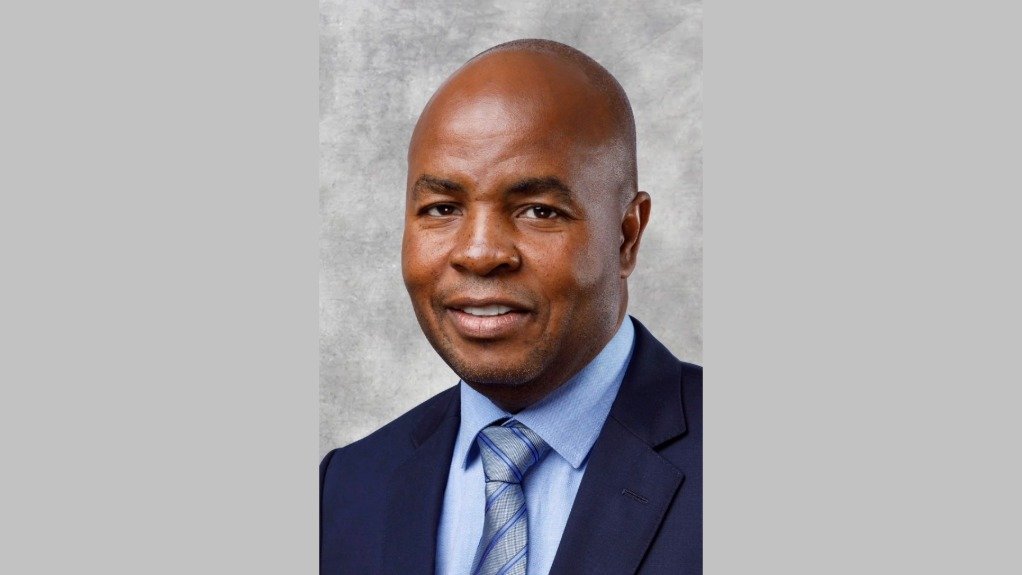
Written by Mandla Padney Ndlovu, Premier of Mpumalanga
EMAIL THIS ARTICLE SAVE THIS ARTICLE ARTICLE ENQUIRY FEEDBACK
To subscribe email subscriptions@creamermedia.co.za or click here
To advertise email advertising@creamermedia.co.za or click here

