





The content on this page is not written by Polity.org.za, but is supplied by third parties. This content does not constitute news reporting by Polity.org.za.
JOParliament’s joint oversight delegation visiting flood-damaged areas on Wednesday urged local and provincial authorities to map and identify floodplains and municipal planning policies to prevent people from settling in dangerous floodplain areas.
The Portfolio Committee and the Select Committee on Cooperative Governance and Traditional Affairs (COGTA)’s visit forms part of Parliament’s oversight responsibility to monitor government’s response to the recent disasters and to assess recovery and mitigation plans in affected communities.
The joint delegation concluded the Limpopo leg of its week-long oversight visit to flood-affected communities with a site visit to the Mbaula Village in the Greater Giyani Local Municipality and Petanenge in the Greater Tzaneen Municipality. During a briefing by the leadership of the Mopani District and the local municipalities in the area earlier on Wednesday, the delegation heard that the cost of repairing the flood-damaged infrastructure is estimated at over R3.3 billion and that at least five fatalities had been recorded in the district.
During the site visit to Mbaula Village, the joint delegation met with community representatives, traditional authorities and municipal leadership to discuss the causes and the impact of the recent floods. Houses collapsed, while roads and electricity infrastructure, among other things, were damaged. Members called for proactive mitigation plans, as government should not wait for disasters to occur before responding. The delegation also encouraged traditional authorities and municipalities to work together in this regard.
Members of the joint delegation were informed that decisions on land allocation were often made without meaningful engagement. This means that communities settle close to rivers and on flat, low-lying land that is vulnerable to flooding and exposes them to disasters. Officials blamed this on the lack of coordination between traditional leadership structures and municipal councils.
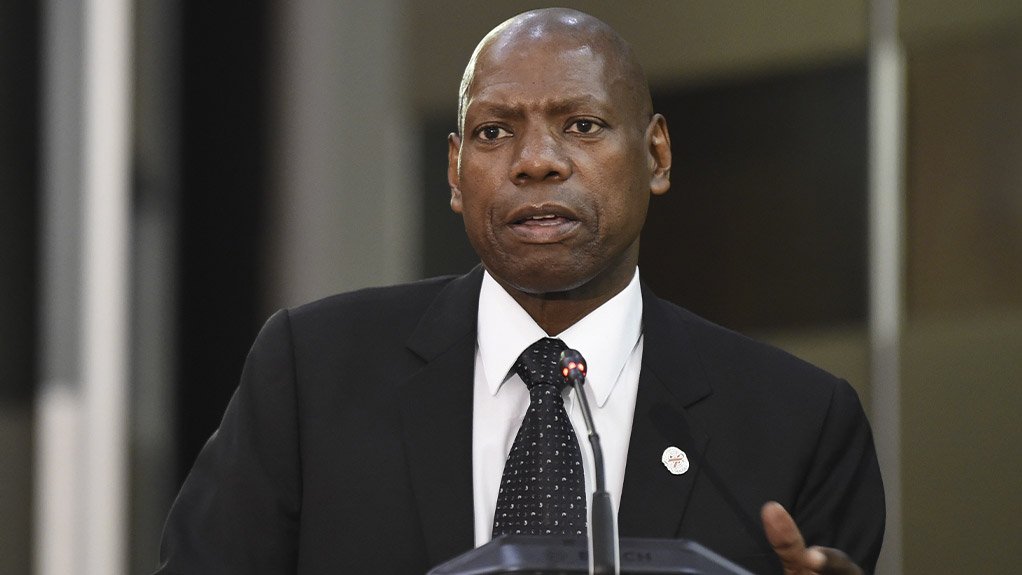
The Chairperson of the Portfolio Committee on COGTA, Dr Zweli Mkhize, cautioned against premature accusations and a “blame game” and noted that without reliable technical assessments and mapping of the area, regulating land-use is ineffective and communities will continue to face disaster risks. He said that comprehensive technical mapping and the installation of visible markers for floodplains are needed. These measures would indicate no-build zones and help enforce municipal bylaws when they are enacted. Once such systems are in place, local authorities would be better positioned to prevent illegal or unsafe development and to hold responsible parties accountable.
The parliamentary delegation highlighted the importance of integrating traditional leadership and communities into spatial development planning. Committee members stressed that communities must be involved from the design stage and not merely be informed after decisions have been made. In response, officials outlined plans to strengthen cooperation between traditional leaders and municipalities through capacity-building initiatives and workshops. These engagements would be conducted at the district level. The delegation also heard that plans are underway to deploy professional surveyors to assess the area.
The Chairperson of the Select Committee on COGTA and Public Administration, Mr Mxolisi Kaunda, reminded local and provincial authorities that the delegation is in the province to focus on oversight to ensure accountability and progress with disaster recovery. “We are not here only to observe, but to make sure that ministers, mayors and departments move with speed to assist the affected communities. We are not here to blame for the sake of blaming. We are here to ensure that everyone does what is expected of them,” said Mr Kaunda.
The delegation also visited Petanenge village in the Greater Tzaneen Local Municipality, where severe storms, including winds, rain and hail, left a trail of damage to houses and infrastructure recently. The delegation, led by Mr Kaunda, visited the Marito Primary School, where the roof was ripped off and an entire administration block, as well as the foundation phase classrooms and ablution facilities, were damaged. The delegation recommended that the MEC for education provide a detailed assessment and time-bound recovery plan within seven days.
This morning (Thursday), the delegation will continue its oversight visit in the Ehlanzeni district in Mpumalanga with site visits to flood-affected areas in Bushbuckridge.
Issued by the Parliamentary Communication Services on behalf of the Chairpersons of the Joint Committee Oversight Delegation, Mxolisi Kaunda and Dr Zweli Mkhize
EMAIL THIS ARTICLE SAVE THIS ARTICLE ARTICLE ENQUIRY FEEDBACK
To subscribe email subscriptions@creamermedia.co.za or click here
To advertise email advertising@creamermedia.co.za or click here

