





As water challenges continue to cripple South Africa’s most populous province, the Gauteng provincial government has reiterated its commitment to resolve the wide-spread issues.
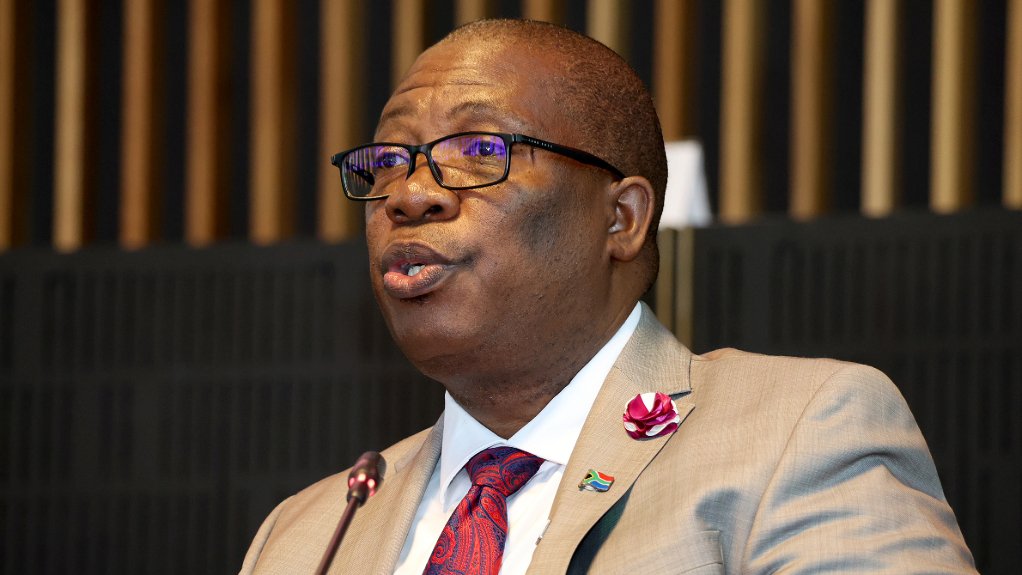
Speaking during his 2026 State of the Province Address (SoPA), Gauteng Premier Panyaza Lesufi said that the challenge was not water availability, but the interruptions caused by infrastructure failures, leaks and high demand peaks.
“We are working as the three spheres of government to fix the water challenges in our province. President Cyril Ramaphosa sent a Ministerial team to camp in our province, and our water emergency team went on overdrive,” he said.
This followed what Lesufi said was an unexpected water shortage across the City of Johannesburg (CoJ) after an explosion of a motor connected to one of the pumps at Rand Water’s Zuikerbosch water treatment plant on January 27.
“After the explosion, a fire hit our transmission machines, followed by a huge burst pipe. Immediately thereafter, our water supply was deeply affected. We then went into emergency mode.”
While within 72 hours, the fire was extinguished and the burst pipe repaired, water levels across CoJ were impacted.
According to Lesufi, water has been fully restored in the Midrand and surrounding areas, and much progress has been made in restoring water across Soweto, except for Meadowlands Zones 3 and 4, and areas receiving water from the Doornkop reservoir.
“Our engineers have assured us that this will be addressed urgently.”
In the West Rand, water in Kagiso and the surrounding areas has been restored and, besides Bedfordview, Tsakane and parts of Kwa-Thema, the Ekurhuleni water supply is now stable, including Tshwane, Sedibeng and West Rand.
“There are areas where residents have a full supply but might be affected by pressure at night owing to nighttime throttling. Nighttime throttling reduces pressure to allow system recovery,” he explained.
Areas affected include Kensington, Bezuidenhout Valley, Bruma and Berea.
Other areas that are still experiencing instability are those supplied through the Commando System and the Brixton Towers.
“However, the areas that remain stubborn and difficult include parts of Westdene, Coronationville, Sophiatown, Melville, Emmarentia and sections of Doornkop.”
To assist in replenishing water storage across the province more rapidly, Water and Sanitation Minister Pemmy Majodina increased the limits of Rand Water’s abstraction licence to temporarily ensure more water flows into the province from the Vaal River Integrated Water System.
To permanently resolve these issues, a R760-million infrastructure investment upgrade is underway in CoJ in a phased approach.
This includes the construction of a new ground reservoir and a tower in Brixton, which will become operational on Saturday, to improve the supply.
“In response to this crisis, we built an emergency boosting pumping station, which will go live next week, to ensure that these areas are covered with water. The permanent solution will be realised once the construction of the 5 km pipeline is concluded at the end of the year.
“[Further,] we are about to conclude the expansion of our water infrastructure so that we can be ready to receive additional water from the Lesotho Highlands Water Project, thus cementing our water security permanently,” Lesufi continued.
In addition, the province, along with mayors and the national government, prioritised the need for investment in water storage to avoid the sporadic shortage of water.
“In Midrand, we are building a new water storage facility to house 20-million litres. The private developers matched this investment with a donation of 10-million litres of water that will be available to the people of the Midrand. Similar investments are rising in Ekurhuleni, Tshwane and the West Rand municipalities.”
While good progress is being made, the province’s water challenges require constant monitoring and support.
“Be assured of our commitment to permanently resolve this challenge,” he said.
ECONOMY
Meanwhile, Lesufi, turning to economic growth, outlined clear targets: defeat crime, corruption and lawlessness; improve infrastructure; fix local government and accelerate service delivery; and bring the private sector to the centre of economic revitalisation.
This includes attracting investment into Gauteng.
Gauteng has attracted R27-billion in foreign direct investment from a diverse set of countries, including the UK, Switzerland, France, Australia, Cyprus, the US and the United Arab Emirates.
The province also secured R312-billion investments through its inaugural Gauteng Investment Conference, of which R73-billion is now moving from commitment to implementation, creating 114 000 jobs across multiple sectors.
In 2025, Gauteng also secured the largest share of the Presidential Investment Conference amounting to over R180-billion, with expectations of a similar share in this year’s Presidential Investment Conference.
The CoJ, with its Netherlands partners, secured a R7-billion waste-to-energy project, and, through the assistance of Electricity and Energy Minister Kgosientsho Ramokgopa, all major electrical appliances and equipment will now be made in Ekurhuleni with an initial investment of R2.2-billion, creating 3 000 new jobs.
“We brought Chery International Car Manufacturers to our shores to build their cars here rather than bringing them to our province as finished products. This intervention will also bring new jobs and also protect 700 jobs affected by Nissan’s repositioning.”
Lesufi further pointed to Heineken Global, which started construction of a R1.9-billion investment in Midvaal, while Microsoft invested R5.4-billion into a data centre expansion in the Midrand-Centurion corridor, positioning Gauteng as Africa’s digital gateway.
“In our last SoPA, we indicated the urgent need to bring a player into the steel sector. We successfully brought in Chung Fung Metal, a R2.5-billion investment that opened its factory doors last month and created more than 1 000 jobs. This new steel factory has brought the latest technology in steel manufacturing to our shores.”
“The Gauteng Dry Port is moving towards reality, representing a projected investment of about R50-billion. Once fully operational, it will create about 50 000 permanent jobs.”
The Tshwane Automotive Special Economic Zone (SEZ) has secured R1.61-billion in confirmed new investments and remains on track to achieve the 4 000 construction jobs committed for Phase 2.
The Vaal SEZ, which has recently been gazetted for comment by Trade, Industry and Competition Minister Parks Tau, is expected to contribute over R10-billion to the Gauteng economy.
Further, Lanseria Smart City has secured R4-billion for Cradle Film Studios, which is set to become the largest film production facility on the continent. The project is expected to create 15 000 jobs, including 10 000 in film production.
In addition, the Tambo Springs SEZ is projected to deliver significant and long-term economic benefits to Gauteng, underpinned by an estimated R23.6-billion capital investment. During the construction phase, the project is expected to contribute to and support about 50 000 jobs and enable over 1 000 new micro, small and medium-sized enterprises.
Haier-Kwikot is investing approximately R2.4-billion in Benoni as part of one of the most significant industrial investments in our province in recent years. This investment secures more than 700 existing jobs.
“All these investments are ready and capable of assisting us to defeat unemployment in our province, totalling 250 000 jobs, especially for the youth,” he concluded.
EMAIL THIS ARTICLE SAVE THIS ARTICLE ARTICLE ENQUIRY FEEDBACK
To subscribe email subscriptions@creamermedia.co.za or click here
To advertise email advertising@creamermedia.co.za or click here

