





South Africa can unlock higher GDP growth by making progress in three critical areas, namely logistics infrastructure, local government service delivery and the effectiveness of its criminal justice system, which would position South Africa to achieve sustained economic growth above 2%.
South Africa has not managed to achieve two consecutive years of growth above 2% for more than a decade, says business organisation Business Leadership South Africa (BLSA) CEO Busi Mavuso.
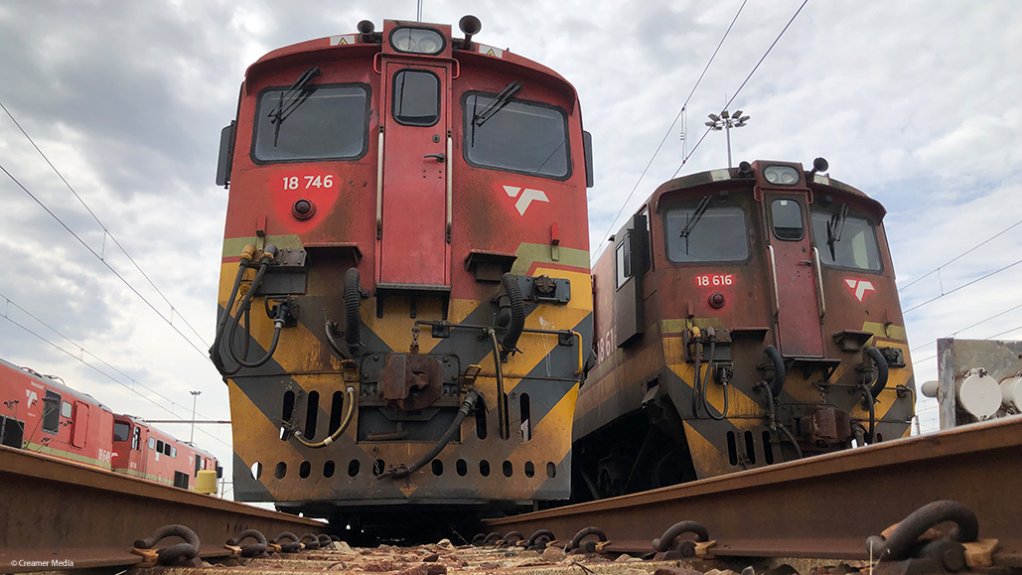
In terms of rail logistics, 11 private rail operators have been selected to operate 41 routes across six corridors, which offers a way to significantly expand the capacity and reliability of the local rail network. Transnet and the operators are now in commercial negotiations to finalise access agreements for up to ten years.
The first operations are due to start in the second half of this year and will create the reliability that mining companies, agricultural exporters and manufacturers need to commit to expansion, she says.
Port concessions are showing similar momentum, with Transnet finalising the first port concession deal for the Port of Durban's Container Terminal Pier 2 in December. The terminal will be managed by Philippine-based container terminals operator International Container Terminal Services for the next 25 years.
This terminal handles more than 40% of South Africa's container volumes and investment in capacity and efficiency could have a dramatic impact. A similar concession deal has been signed for Cape Town's liquid bulk terminal by bulk liquid storage terminal operator FFS Tank Terminals, Mavuso adds.
“More concessions should result in genuine competition between ports to offer businesses better services, while rail companies will compete to move goods to those ports efficiently and cost effectively.
“These breakthroughs must deliver a shift in the reliability of the logistics system. We need to see South Africa's ports move up the global efficiency rankings, while reducing the cost of getting goods to markets.”
A transformed logistics system would provide significant impetus for investment because, when businesses know they can reliably move inputs and outputs, previously marginal investments become viable, she notes.
Further, to accelerate growth, the country must address the poor performance of local government. Johannesburg, which is the economic heart of the country, illustrates the crisis, with large parts of the city being without water for a week as Rand Water undertook maintenance.
Several suburbs are also scheduled to be without water for the next two weeks. Joburg Water, which is responsible for last-mile delivery, loses one-quarter of its water through leaks and has storage capacity far below what is needed, which reflects decades of deferred maintenance that has left infrastructure failing.
Problems in local governments are systemic. While Eskom and the national grid are in better shape, many consumers rely on municipal electricity distribution, which is where failures owing to poorly maintained infrastructure continue to disrupt businesses and households.
Similarly, roads are deteriorating, traffic lights remain non-functioning across major metros and refuse collection is unreliable, which directly affects productivity, logistics costs and the basic functioning of the economy, Mavuso explains.
Structural reform initiative Operation Vulindlela is launching specific interventions during 2026 that should begin to turn the poor performance of local municipalities around.
The most important of these interventions is the ring-fencing of utility revenues to ensure money collected by municipalities for water and electricity is spent on maintaining and upgrading those systems rather than subsidising other services.
This will address a fundamental governance failure where utilities have been treated as cash cows rather than infrastructure that requires constant investment, she says.
Operation Vulindlela is also supporting capacity building by pairing private sector technical experts with municipal engineers, which is a model that has been seen work in electricity reform, she notes.
Additionally, to stimulate growth, South Africa must see a marked improvement in the performance of its criminal justice system. The Madlanga Commission has documented, in detail, how dysfunctional the police force has become by revealing problems ranging from political interference in investigations to failures in basic case management and evidence handling.
“When the final report emerges, government must use it to set a new baseline for police reform, the way the Hefer Commission enabled the South African Revenue Service's transformation or the Mpati Commission underpinned the Public Investment Corporation's rehabilitation.
“However, this requires political will to implement uncomfortable recommendations about removing compromised officials and rebuilding investigative capacity.”
These three priorities are interconnected parts of the enabling environment that either attract or repel investment.
“When local and foreign investors ask when South Africa will achieve sustained economic growth above 2%, they are really asking when we'll have resolved these fundamental constraints.
“We have not had two consecutive years of more than 2% growth for more than a decade, but 2026 could mark the beginning, if we deliver on these three priorities,” Mavuso emphasises.
“We now need execution. Transnet must move rail and port concessions from agreements to operations, municipalities must implement revenue ring-fencing and accept technical support and government must act on Justice Madlanga's findings and empower the new National Director of Public Prosecutions Jan Lekgoa Mothibi.”
BLSA will work intensively with government and its own member organisations on all three of these issues. The business-government partnership model that ended loadshedding and delivered the G20 summit has proven what is possible.
Applying that same focus and coordination to logistics, local government and criminal justice can unlock the growth trajectory South Africa desperately needs, she says.
EMAIL THIS ARTICLE SAVE THIS ARTICLE ARTICLE ENQUIRY FEEDBACK
To subscribe email subscriptions@creamermedia.co.za or click here
To advertise email advertising@creamermedia.co.za or click here

