





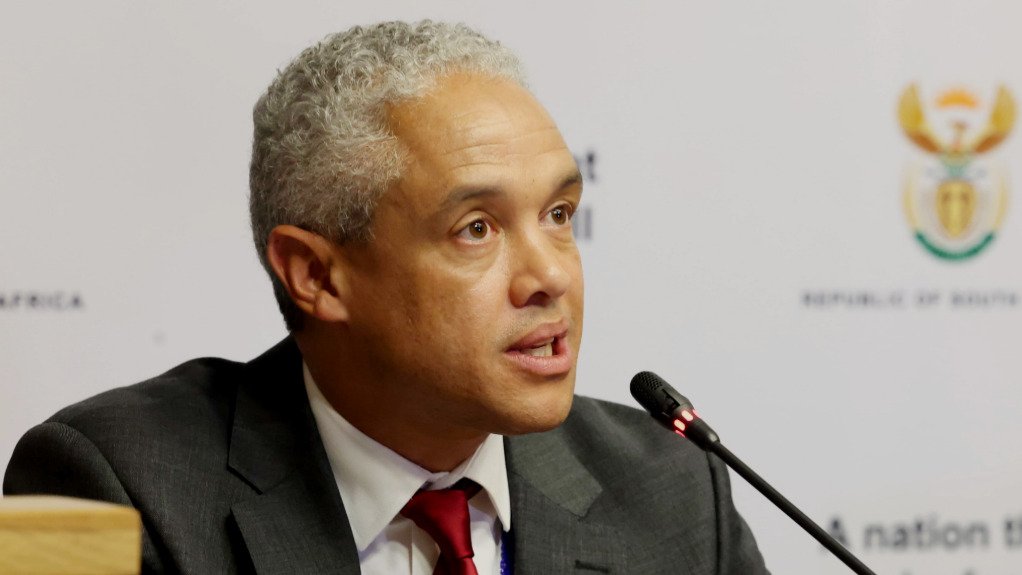
South African Reserve Bank governor Lesetja Kganyago says the spin-offs from the policy decision to lower the inflation target have “exceeded our most optimistic expectations”.
On November 12, Finance Minister Enoch Godongwana announced that the new inflation target for South Africa would be 3% with a one percentage point tolerance band. The previous target range of 3% to 6% had been in place for 25 years.
In response to a question posed on the impact of the change during a recent Budget media briefing, Kganyago said the bank had expected that lowering the inflation target would result in a 200 basis point lowering of bond yields, alongside a strengthening of the rand and a lowering in the country-risk premium.
“What we have now calculated is that, from December 2024 to date, bond yields in South Africa have gone down by 400 basis points. That’s significant and it’s a significant saving.”
He acknowledged that the better-than-expected performance could not be attributed to the new target alone, with other positive changes having also occurred simultaneously, such as improved commodity prices that also accentuated the appreciation of the rand.
The lowering of the target had also had an influence on inflation expectations, a channel that the target aims to specifically address.
“[In] December, when the inflation expectations survey by the Bureau for Economic Research came out, inflation expectations were at their lowest since we started surveying inflation expectations in South Africa. And that is significant, because that decline says to us that inflation expectations are converging towards the target,” Kganyago said.
R277BN DEBT WINDFALL
Meanwhile, National Treasury director-general Dr Duncan Pieterse provided a quantitative assessment of the impact that recent monetary and fiscal policy developments would have on the country’s debt profile.
He said a National Treasury calculation showed that by 2028/29, government’s debt stock would be R277-billion lower as calculated in the 2026 Budget relative to what was shown in the Medium-Term Budget Policy Statement (MTBPS) of November.
Pieterse said R47.6-billion of that could be attributed to lower revaluations of the country’s inflation-linked bonds, which were revalued quarterly.
“Because of lower inflation, that bond portfolio is now going to cost us R47.6-billion less than we thought in the MTBPS,” he explained.
“But it’s important to say that the other elements of that R277-billion lower debt stock have to do with improving fiscal credibility.
“For example, we are issuing bonds at far lower discount rates now than we did last year, and because we are issuing cheaper bonds our debt stock is going to be lower by about R59-billion and that’s really because of the fiscal improvements that we are seeing alongside the shift in the inflation target.”
EMAIL THIS ARTICLE SAVE THIS ARTICLE ARTICLE ENQUIRY FEEDBACK
To subscribe email subscriptions@creamermedia.co.za or click here
To advertise email advertising@creamermedia.co.za or click here

