





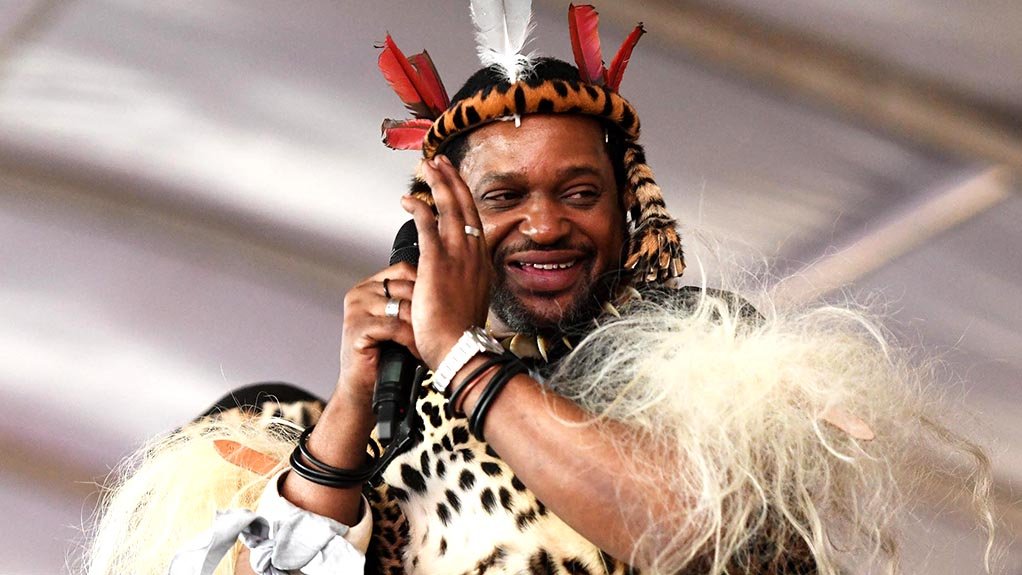
The Inkatha Freedom Party (IFP) in the KwaZulu-Natal legislature on Wednesday expressed its full support for Zulu King Misuzulu kaZwelithini’s suggestion that the KwaZulu-Natal province be renamed KwaZulu.
The party said kaZwelithini’s proposal was “timely and historically justified”.
The colonial name of Natal and the KwaZulu homeland were merged in South Africa’s democratic transition in 1994.
“… as history tells us – and it is well known – that in the past, during the reign of King Shaka, who ruled over many tribes, the boundaries of KwaZulu extended as far as the uMtamvuna River in the Eastern Cape, Balfour in Gauteng, and Ermelo in Mpumalanga. The demarcation resulted in the loss of many parts of KwaZulu, which were placed under other provinces. This proposal therefore comes as no surprise and is neither unreasonable nor uncalled for,” stated IFP national chairperson and Chief Whip of the KwaZulu-Natal legislature Blessed Gwala.
Last week, kaZwelithini announced that he would start a campaign to drop ‘Natal’ from the province’s name and insisted that it must be known as KwaZulu.
"We need to remove this Natal. This is KwaZulu so I don't understand why we have this Natal,” he said.
The IFP said it felt “vindicated” by kaZwelithini’s proposition, and said the name change would acknowledge the Zulu Kingdom and its historical, cultural, and political significance.
Gwala said the current name remained a “compromise that failed to fully reflect this reality” and added that during the Convention for a Democratic South Africa negotiations in the early 1990s, there was intense debate over the renaming of provinces, particularly Natal.
He believes the King’s call will open the door to addressing other long-standing historical distortions, particularly the matter of Pietermaritzburg, which is also referred to as uMgungundlovu.
“It is a well-known fact that uMgungundlovu was King Dingane’s royal palace near uLundi, which was destroyed, after which the Voortrekkers named Pietermaritzburg a ‘fake’ uMgungundlovu with the deliberate intention of mocking and ridiculing the Zulu people.
“Continuing to refer to Pietermaritzburg as uMgungundlovu is deeply painful and misleading, as it distorts history and trivialises the destruction of the original royal palace,” he explained.
He said retaining the name perpetuates a “false narrative and gives the impression” that the Zulus accept or celebrate the injustices imposed on them.
“We now have both the moral authority and constitutional right to correct these historical wrongs,” Gwala said.
The party wants kaZwelithini’s call to further empower the provincial government, particularly the Department of Sport, Arts and Culture, to urgently review and correct indigenous place names that have been incorrectly written or distorted over time.
This included places such as uMbogintwini and Ixopo, whose current spellings stripped them of meaning and cultural context, he added.
He highlighted that the correct writing and restoration of indigenous place names was not administrative but a matter of “dignity, identity, and justice”.
“Place names carry history, meaning, and collective memory. When written correctly, they restore linguistic integrity, affirm cultural heritage, and honour the lived experiences of local communities,” he explained.
Gwala stated that this process would strengthen social cohesion, promote unity, and advance reconciliation by ensuring that public spaces truthfully reflected the histories and identities of the people they represented.
EMAIL THIS ARTICLE SAVE THIS ARTICLE ARTICLE ENQUIRY FEEDBACK
To subscribe email subscriptions@creamermedia.co.za or click here
To advertise email advertising@creamermedia.co.za or click here

