





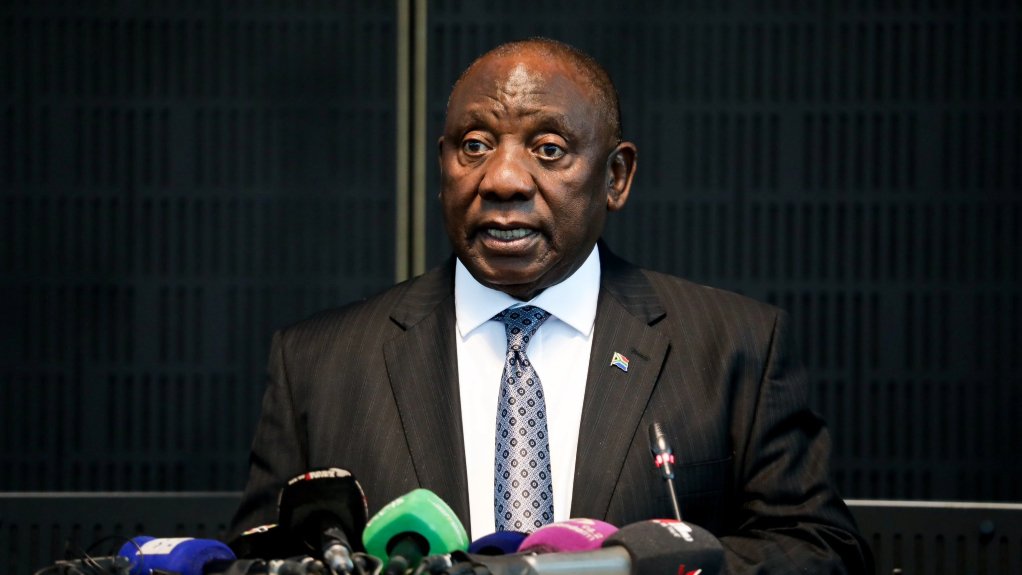

President Cyril Ramaphosa says South Africa can no longer afford to address its remaining housing backlog using traditional construction methods and must move urgently towards innovative building technologies (IBTs), supported by private-sector finance, to deliver millions of homes at a lower cost.
“We are the only country that I know . . . even on the African continent, that builds houses and hands them over to [the] people of [the] country,” Ramaphosa said at the IBT Summit, at the Nasrec Expo Centre, in Johannesburg, on February 3, adding that government has delivered taxpayer-funded homes to about five-million households over the past 30 years.
He said the State’s large-scale housing programme had transferred value to poor households, noting that a basic calculation showed that providing homes to five-million families over 30 years would have cost government about R500-billion.
He described the programme as one of the most ambitious social interventions in Africa. However, he said the scale of unmet demand remained severe, with more than 5.5-million families still on housing waiting lists across the country.
Ramaphosa said closing this gap using conventional construction would require between 2.5-million and 3-million additional houses. At a basic estimated cost of about R100 000 per unit, he said this would require between R250-billion and R400-billion in additional spending, far beyond what the State could currently afford.
He said housing delivery was increasingly constrained by inadequate supply, limited land availability, rising construction costs and delays in project execution. These pressures, he said, were contributing to housing scarcity, which in turn were pushing up property prices and rental costs for the middle class.
Ramaphosa said government had a constitutional obligation to provide housing for poor and homeless people but warned that the rapid growth of informal settlements was worsening already difficult conditions.
He noted that South Africa had about 4 700 informal settlements, many of which lacked proper planning and basic services.
He said the delivery of water, sanitation and other services to unplanned settlements was stretching government capacity and resources, while rapid urbanisation, population growth and migration were reshaping settlement patterns. He added that climate change was compounding these challenges, particularly where people were building on land prone to flooding, drought and heat stress.
“It is estimated that by 2050, nearly eight out of every ten South Africans will live in cities,” Ramaphosa said, warning that many in urban areas would likely remain in informal settlements if planning failures were not addressed.
He said weak town planning had allowed people to settle in unsafe areas and said the country needed to return to proper planning processes to guide future development.
Against this backdrop, Ramaphosa said technological change was no longer optional in the housing sector. He said access to adequate housing should not depend solely on income, and that new approaches were needed to meet demand at scale.
“It is time to think differently. We have to think beyond traditional ways of building. We have to think beyond just brick and mortar,” he said.
He said IBTs offered a way to deliver houses faster, at scale and at lower cost, while also reducing carbon emissions, cutting water use and improving energy efficiency and durability. He stressed that cost was a central consideration and said new technologies must ultimately make housing cheaper.
Ramaphosa signalled that government expected the construction industry to adopt modern building methods and suggested that companies unwilling to do so should no longer be prioritised for housing projects.
He said scaling innovation would depend heavily on the support of financiers and insurers, as housing delivery could not be funded by the State alone. He said private capital would be essential to closing the housing gap.
“It should not only be government that has to provide the R300-billion or R400-billion to house the rest of the people who need housing,” he said.
Ramaphosa said government, development finance institutions, banks and insurers had committed to align funding tools to reduce risk, support innovative housing projects and recognise certified innovative building technology homes as financeable and insurable assets.
However, without this alignment, the adoption of new technologies would stall and fail to deliver the scale of housing required.
The two-day IBT Summit sought to bring together government officials, representatives from the building and construction industry, academia, investors, and civil society to advance innovative solutions for the delivery of sustainable human settlements.
Held under the theme ‘Mainstreaming IBTs for Sustainable Human Settlements’, the IBT Summit was aimed at accelerating the adoption of IBTs to enhance housing delivery across South Africa.
IBTs offer alternatives that improve efficiency through lightweight structures, energy-efficient designs, prefabrication, and environmentally sustainable construction methods.
The objectives of the IBT Summit include strengthening policy integration for IBTs within human settlements, fostering collaboration and investment between government, the private sector, non-profit organisations, and international stakeholders, and showcasing disruptive innovation in construction.
In addition, the summit sought to raise awareness among beneficiaries, policymakers, and industry stakeholders about the affordability, speed, and sustainability of IBTs.
EMAIL THIS ARTICLE SAVE THIS ARTICLE ARTICLE ENQUIRY FEEDBACK
To subscribe email subscriptions@creamermedia.co.za or click here
To advertise email advertising@creamermedia.co.za or click here

