





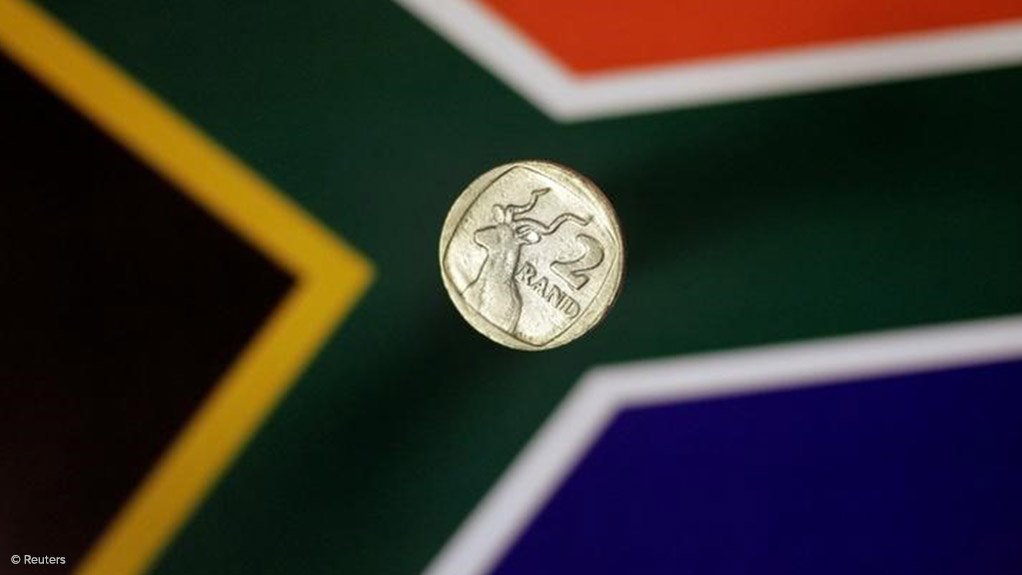

Goldman Sachs and Morgan Stanley see room for the South African Reserve Bank to lower its inflation forecast for 2026, as policymakers prepare for their first interest-rate decision of the year later this week.
The rand has strengthened considerably from the central bank’s November assumption of 17.25 per dollar for the first quarter and oil prices are tracking well below its $67-a-barrel forecast for this year, Goldman’s Andrew Matheny and Ludovica Ambrosino wrote in a note.
“In our view, this implies a likely downward revision of 0.2-0.3 percentage points to the inflation outlook for 2026,” they said.
That view matches projections of 3.2% by Morgan Stanley and Nedbank Corporate and Investment Banking, and compares with the 3.3% median estimate of 20 economists surveyed by Bloomberg and the central bank’s 3.5% forecast. At that level, inflation would be close to the monetary authority’s new 3% target, formally adopted by the National Treasury in November.
Despite the investment banks’ dovish outlook, they’re split on whether policymakers will cut interest rates on Thursday — a division echoed in Bloomberg’s broader survey of 21 economists, where 11 expect a 25 basis-point cut to 6.5% and the rest a hold.
“While we see the case for a rate cut and view the decision as a relatively close call given the recent sharp rand appreciation, we think that the SARB would prefer to err on the side of caution and remain behind the curve in the cutting cycle,” Matheny and Ambrosino said. “This is especially the case in the context of somewhat stronger recent growth data that reduce the urgency to cut rates, as well as in the presence of geopolitical risks that could pose upside to the oil price or downside to risk sentiment and the rand.”
Morgan Stanley’s Andrea Masia said in a note seen by Bloomberg that he expects officials to adopt a cautious approach because of more rigid inflation expectations and foreign-exchange weakness that’s anticipated in the second half of the year.
By contrast, Nedbank CIB’s Reezwana Sumad points to the rand’s roughly 3% gain against the dollar this year, falling oil prices and inflation undershooting the central bank’s 2025 forecast by about a percentage point as reasons to lower borrowing costs.
The central bank’s own models show gradual interest-rate cuts in 2026 as price pressures subside.
EMAIL THIS ARTICLE SAVE THIS ARTICLE FEEDBACK
To subscribe email subscriptions@creamermedia.co.za or click here
To advertise email advertising@creamermedia.co.za or click here

