





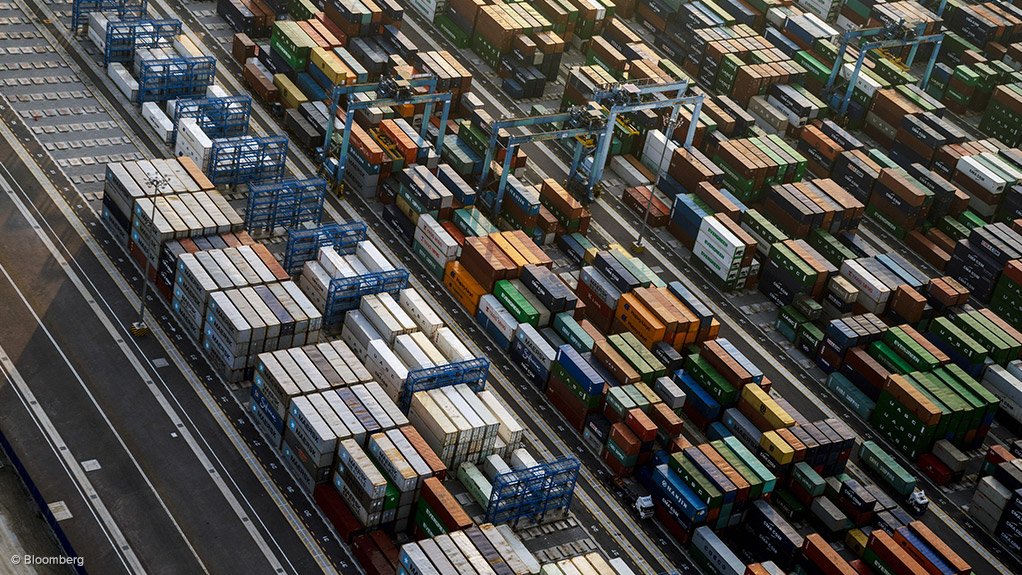
Global trade is expected to continue growing this year but at a slower pace after reaching a record high in 2025, as rising protectionism, geopolitical tensions and tighter regulation reshape trade flows and increase risks for developing economies, UN Trade and Development (Unctad) reports.
In a global trade update published on January 15, Unctad said preliminary data showed global trade had grown by 7% in 2025, exceeding $35-trillion for the first time.
While trade growth is projected to remain positive this year, Unctad said momentum was slowing as the global economy entered a more complex and fragmented phase.
Unctad said global economic growth was expected to remain subdued at 2.6% this year, with developing economies excluding China slowing to 4.2%. Growth in major economies is also weakening, with the US projected to expand by 1.5%, down from 1.8% in 2025, China expected to grow by 4.6%, down from 5%, and Europe facing modest demand despite some fiscal stimulus.
According to Unctad, slower growth was weakening export demand, tightening financial conditions and increasing vulnerability to external shocks, particularly for developing countries.
The update said the global trading environment was being reshaped by geopolitical tensions, shifting supply chains, accelerating digital and green transitions and the expansion of national trade regulations. Unctad said these forces were redefining global value chains and creating uneven risks and opportunities across regions.
Unctad noted that global trade rules were at a critical juncture ahead of the World Trade Organisation’s fourteenth ministerial conference in Yaoundé, Cameroon, as the use of unilateral tariffs and trade restrictions continued to rise.
It said that developing countries were seeking the restoration of the dispute settlement system, including the Appellate Body; the preservation of policy space through special and differential treatment; and progress in negotiations on agriculture, fisheries, digital trade and investment facilitation.
The organisation said trade and climate measures, including subsidies and standards, were adding further pressure to the multilateral trading system.
Tariffs are expected to remain a key source of uncertainty this year, Unctad said, noting that use thereof increased sharply in 2025, particularly in manufacturing.
Measures led by the US for industrial and geopolitical reasons had raised average global tariffs unevenly across sectors and trading partners. Unctad said tariffs disrupted trade even before they were implemented by increasing costs, weakening demand and discouraging investment, with smaller and less diversified economies most exposed.
The report said global value chains, which account for nearly two-thirds of world trade, were continuing to reconfigure as firms prioritise risk management over cost efficiency.
Unctad said companies were diversifying suppliers, relocating production closer to end markets and increasing control over key inputs. While this could strengthen resilience, the organisation said it may also reduce efficiency and weigh on overall trade growth.
According to Unctad, countries with strong infrastructure, skills and stable policies were better positioned to attract investment, while others risked marginalisation.
The organisation said services were increasingly driving global trade growth. Services accounted for 27% of global trade and grew by about 9% in 2025, far outpacing goods. They also made up 71% of global intermediate inputs.
Unctad said digitalisation was accelerating this shift, with digitally deliverable services accounting for 56% of global services exports. However, the update noted that a wide digital gap persisted, with digitally delivered services making up about 61% of services exports in developed economies compared with just 16% in least developed countries.
South–south trade had become a major engine of global growth, Unctad noted. Between 1995 and 2025, south–south merchandise exports rose from about $500-billion to $6.8-trillion, and 57% of developing-country exports now go to other developing economies.
Unctad said this trend was driven largely by Asia’s regional value chains and was also strengthening in Africa, where more than half of exports now go to developing markets.
Environmental measures were also playing a growing role in global trade, Unctad said, as climate commitments moved into implementation. Enhanced pledges by 113 countries could reduce global emissions by about 12% by 2035.
Unctad said clean energy technology markets could reach $640-billion a year by 2030, while measures such as carbon pricing, the EU’s Carbon Border Adjustment Mechanism from this year and clean energy industrial policies were reshaping market access and competitiveness.
The update said markets for critical minerals used in clean energy technologies remained volatile. By late 2025, prices of key minerals were between 18% and 39% below their 2021 and 2022 peaks, easing costs for electric vehicles and renewables but weighing on mining investment.
Unctad said mining investment growth slowed to 5% in 2024, down from 14% in 2023 and 30% in 2022, while export controls and bilateral supply deals were increasing the risk of fragmented value chains.
The organisation noted that agricultural trade remained central to food security, with food and agricultural products accounting for about one-third of commodity exports. Food markets remained vulnerable to conflict, trade restrictions, extreme weather and high fertiliser prices, with developing countries particularly exposed owing to limited fiscal and policy buffers.
Trade regulations were also tightening as governments increasingly used trade policy to pursue domestic goals, Unctad pointed out. Since 2020, about 18 000 discriminatory trade measures had been introduced, and technical regulations and sanitary standards now affected about two-thirds of world trade.
Unctad said the expansion of non-tariff measures in 2026 was expected to raise compliance costs, particularly for smaller exporters and lower-income economies.
Unctad said it would continue to monitor these developments and provide data, analysis and policy support as countries navigated a more fragmented global trade environment.
EMAIL THIS ARTICLE SAVE THIS ARTICLE ARTICLE ENQUIRY FEEDBACK
To subscribe email subscriptions@creamermedia.co.za or click here
To advertise email advertising@creamermedia.co.za or click here

