





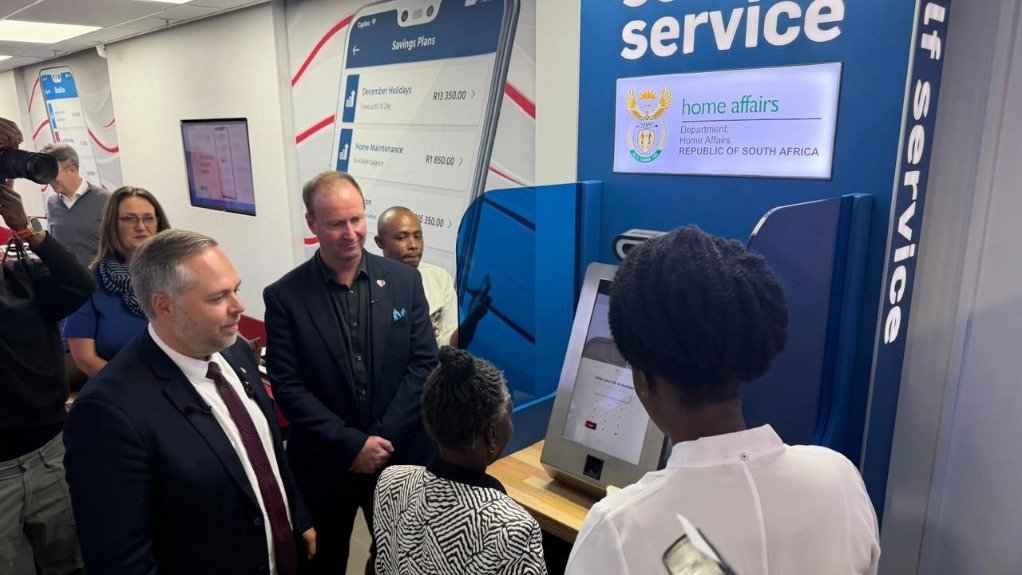
The Government Communication and Information System (GCIS) on Wednesday clarified that the partnership between the Department of Home Affairs (DHA) and banks for the Smart ID rollout began as part of a multi-channel access model to increase the DHA’s footprint.
Government said claims that suggested the partnership is a new initiative driven by a specific political party are incorrect.
This after the Democratic Alliance welcomed the announcement of DHA services at Capitec and Standard Bank branches, claiming that it was “a shining example of what a DA Minister can achieve in National Government, and showed that the DA agenda of improving lives and making government services easier to access is working.”
The GCIS explained that the Smart ID digitisation programme was initiated in 2015 under former Minister of Home Affairs Dr Malusi Gigaba, as part of government’s broader efforts to modernise the national identification system and enhance service delivery.
“At the time of its launch, the partnership included ABSA, First National Bank (FNB), Nedbank and Standard Bank. Investec.
“Discovery Bank joined in 2019 under the then Minister of Home Affairs Dr Siyabonga Cwele,” it said.
On Monday Home Affairs Minister Dr Leon Schreiber announced that the Department’s new Digital Partnership Model with South Africa’s banking sector had officially entered its live operational phase.
The GCIS explained that the collaboration with banks was established to make Digital ID services more accessible to citizens across the country using banking staff.
The GCIS said the initiative is regulated by the Memoranda of Understanding (MoUs) signed between the DHA and the participating banks.
“The security guarantees are assured because the Automated Biometric Identification System database has the biometrics to ensure that no photo swaps can be facilitated at banks,” the GCIS explained.
Government pointed out that there were 30 bank branches that participated in the initiative before the recent joining of Capitec to the programme.
Seventeen are in Gauteng, five in the Western Cape, two in the Eastern Cape, three in KwaZulu Natal, and one each in Mpumalanga, Limpopo and the Northern Cape.
Government has welcomed that Capitec ultimately joined the initiative under Schreiber, as well as the upgrading of technologies in Standard Bank and FNB.
“The advancement of this system will support government’s initiative to eradicate the Green-barcoded ID books and move South Africans to a more fraud-proof Digital IDs,” it said.
EMAIL THIS ARTICLE SAVE THIS ARTICLE ARTICLE ENQUIRY FEEDBACK
To subscribe email subscriptions@creamermedia.co.za or click here
To advertise email advertising@creamermedia.co.za or click here

