





Agriculture Minister John Steenhuisen has confirmed that the one-million doses of foot and mouth disease (FMD) vaccine received in the country last Saturday have been distributed to outbreak hotspot areas in all provinces, with KwaZulu-Natal having administered vaccines just 24 hours after receiving supplies.
Notably, KwaZulu-Natal and the Free State each received 200 000 doses, followed by the Eastern Cape with 150 000 doses, Mpumalanga, Limpopo and North West with 100 000 doses each and Gauteng, the Northern Cape and the Western Cape with 70 000, 50 000 and 30 000 doses, respectively.
KwaZulu-Natal is currently the primary FMD risk epicentre housing more than 1.6-million cattle in high-priority zones.
Steenhuisen assures the public that the Department of Agriculture (DoA) is deploying 45 teams daily to 45 locations to vaccinate up to 90 animals a day, to cover the 2.4-million cattle in KwaZulu-Natal.
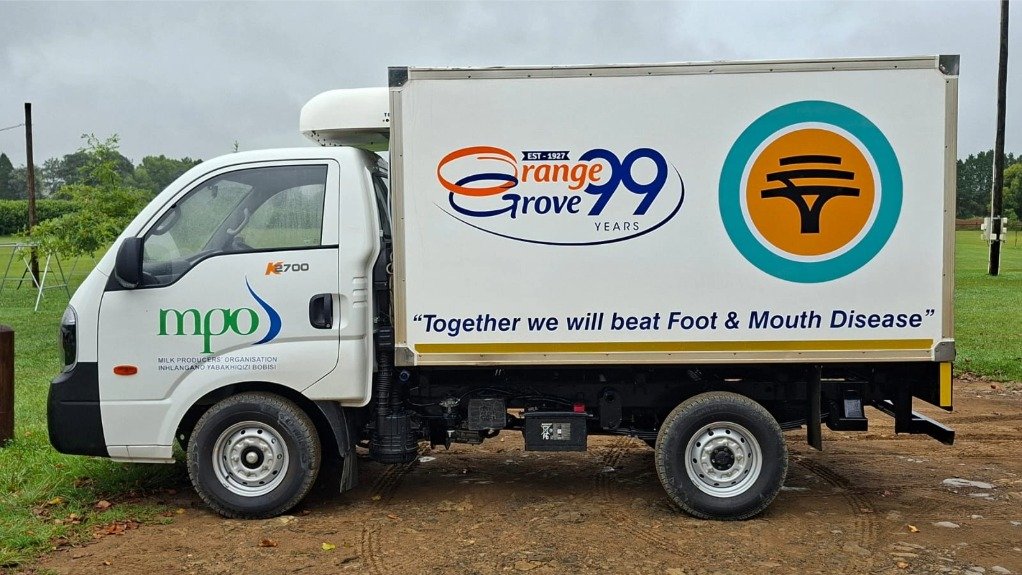
In contributing to the current vaccination efforts under way in KwaZulu-Natal, financial services provider FNB has sponsored two vehicles to distribute vaccines, which are being used by Orange Grove Dairy, the Milk Producers’ Organisation, the KwaZulu-Natal dairy industry and the KwaZulu-Natal Department of Agriculture.
The first large consignment of imported FMD vaccines, from Biogénesis Bagó in Argentina, is part of the DoA’s national mass vaccination strategy to decisively deal with FMD outbreaks in the country.
Steenhuisen says the Onderstepoort Biological Products facility ensured the rapid disbursement of the vaccines to all provinces by February 25 already.
The DoA has also secured vaccines from Türkiye called Dollvet, with 1.5-million doses due to arrive on local shores by February 28. Millions more doses from Argentina are due to arrive shortly after.
Locally, the Agriculture Research Council has committed to producing 20 000 vaccines a week and scaling production up to 200 000 doses a week by 2027.
Moreover, Steenhuisen confirms that there are no restrictions on milk from vaccinated or uninfected farms, as is captured in the amendment of the 2024 FMD Contingency Plan – which will be gazetted soon.
For the movement of milk from quarantined farms, only a single pasturisation process will be required for local consumption. Milk that originates from properties under FMD restriction may not be processed for the export market, unless expressly agreed to by the importing country.
He reiterates that only farms with confirmed or clinical signs of FMD infection will be quarantined.
“We are doing everything in our power to keep milk moving and keep herds safe,” Steenhuisen emphasises.
He welcomes Cabinet’s approval of the national mass vaccination programme and National Treasury’s reallocation of about R400-million in underspent agriculture funds toward the fight against FMD.
FARMERS NOTE
To ease restrictions on affected farms as soon as possible, the Veterinary Working Group has agreed on amended guidelines that can be implemented immediately.
On farms or premises that are infected or suspected of being infected, all cloven-hooved animals must be individually identified and recorded on a database that will ensure lifelong traceability.
On farms or premises that are not infected or suspected of being infected, all vaccinated cloven-hoofed animals must be individually identified and recorded on a database that will ensure lifelong traceability.
Moreover, no “F” branding will be required for suspect or infected or vaccinated animals.
In respect of controlled slaughter from FMD quarantined premises, the current requirements and risk mitigation for slaughter earlier than three months after day zero at designated abattoirs remain in place.
From three months after day zero, controlled slaughter from quarantined premises can take place at any registered non-export abattoir.
After three months post day zero, meat must be subject to maturation. However, there will be no further risk mitigation and no loss of parts of the carcass.
Additionally, no animals originating from properties under FMD restriction may be slaughtered for the export market, unless expressly agreed to by the importing country.
Steenhuisen concludes that it is ultimately a partnership between government, industry and community that will see South Africa reach FMD-free status and restore confidence in the livestock sector.
EMAIL THIS ARTICLE SAVE THIS ARTICLE ARTICLE ENQUIRY FEEDBACK
To subscribe email subscriptions@creamermedia.co.za or click here
To advertise email advertising@creamermedia.co.za or click here

