





For Creamer Media in Johannesburg, I’m Lumkile Nkomfe.
Making headlines: Mixed political reactions to water crisis committee announced during SoNA; Economists see three more South Africa rate cuts, split on when; And, Mozambique port city braces for impact of Cyclone Gezani
Mixed political reactions to water crisis committee announced during SoNA
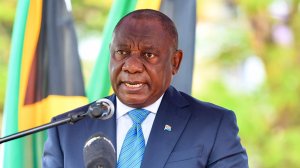
Political parties expressed mixed reactions to President Cyril Ramaphosa’s State of the Nation Address, criticising the announcement of the National Water Crisis Committee.
Yesterday, Ramaphosa declared the ongoing water crisis as the most critical national concern and announced that he will chair the water crisis committee, which will provide a coordinated national response to water supply disruptions.
ActionSA Parliamentary leader Athol Trollip said water infrastructure took decades to collapse and equally long to rebuild, stating that Ramaphosa’s “sudden flurry” of promises is too little, too late.
Democratic Alliance leader John Steenhuisen pointed out that despite Ramaphosa’s admission that some local municipalities were not providing basic services as they should, he said the President’s SoNA did not go far enough to deliver action to fix the “broken” municipalities.
Meanwhile, GOOD secretary-general Brett Herron welcomed Ramaphosa’s intervention in the water crisis in towns and cities, and in Johannesburg in particular.
Economists see three more South Africa rate cuts, split on when
The South African Reserve Bank will likely cut interest rates three more times before ending its current easing cycle, according to a survey.
Most of the 14 economists canvassed by Bloomberg, including those at Morgan Stanley, UBS Group AG and BNP Paribas SA, see scope for the central bank to lower borrowing costs three more times by 25 basis points each, to 6%. That would bring to an end its rate-cutting cycle that began in September 2024 and has so far delivered cumulative reductions of 1.5 percentage points, they forecast.
BNP sees the cuts being completed by September and UBS and Morgan Stanley by the first quarter of 2027. The central bank’s own model signals room for a further 75 basis points of easing by 2027.
Elna Moolman, head of South Africa macroeconomic research at Standard Bank Group said more rate reductions would support an economy that has stagnated for more than a decade, likely boosting household consumption expenditure, which accounts for about two-thirds of gross domestic product.
The central bank’s monetary policy committee left the benchmark rate at 6.75% on January 29, citing global uncertainty and risks from higher food and electricity prices, even as it lowered its inflation forecast to 3.3%, closer to its new 3% target.
And, Mozambique port city braces for impact of Cyclone Gezani
Residents of Inhambane, a port city in Mozambique, were reinforcing their homes with sandbags and corrugated iron in preparation for the potentially devastating impact of Cyclone Gezani, expected to hit the area today.
The tropical storm tore through Madagascar earlier this week, killing at least 40 people and causing major damage to the Indian Ocean island's second-biggest city Toamasina.
Mozambique has been hit by frequent weather-related disasters that scientists say have been exacerbated by climate change.
The Southern African country is only just recovering from severe flooding that affected more than 700 000 people and damaged over 170 000 homes in recent weeks, according to the United Nations Office for the Coordination of Humanitarian Affairs.
Mozambique's weather service expects Cyclone Gezani to pass close to Inhambane any time from this afternoon, before moving back out into the Mozambique Channel.
That’s a roundup of news making headlines today
Don’t forget to follow us on the X platform, at the handle @PolityZA
EMAIL THIS ARTICLE SAVE THIS ARTICLE ARTICLE ENQUIRY FEEDBACK
To subscribe email subscriptions@creamermedia.co.za or click here
To advertise email advertising@creamermedia.co.za or click here

