






The content on this page is not written by Polity.org.za, but is supplied by third parties. This content does not constitute news reporting by Polity.org.za.
The Portfolio Committee on Cooperative Governance and Traditional Affairs today noted the written public submissions received on the Intergovernmental Monitoring, Support and Interventions (IMSI) Bill.
Introduced in Parliament in April 2025, this Bill aims to tighten laws on national and provincial government support and interventions in municipalities. The Bill must also remedy the challenges often experienced during interventions. The Constitution already allows national and provincial governments to step in when a province or municipality fails to deliver municipal services like water and electricity. However, procedures for doing this have often been unclear, leading to disagreements about when, how and why interventions should occur.
The Bill provides clear rules for monitoring performance, defines what “executive obligations” are, and sets out the support or corrective steps that must occur before and during an intervention. It also introduces systems to identify early signs of trouble so that problems can be addressed before they become crises. This is important because when a municipality fails in providing services, communities suffer and trust in government breaks down. The IMSI Bill thus seeks to ensure that, when government support or intervention is needed, it occurs in a coordinated, transparent and predictable manner.
On Tuesday, the committee noted the written public submissions received on the IMSI Bill. In the first call for comment, the committee received written submissions from six stakeholders, mostly provincial governments. Following an extension of the deadline, the committee received a further 16 submissions from civil society organisations, among others.
The submissions recognised the Bill as a necessary and overdue attempt to bring greater clarity, consistency and legal certainty to how national and provincial government monitor, support and, where necessary, intervene in provinces and municipalities that fail to meet their constitutional obligations. Stakeholders generally welcomed the Bill’s intention to strengthen early warning systems, improve coordination across spheres of government and promote a more proactive and preventative approach.
The submissions showed a general support for the objectives of the Bill, particularly its emphasis on monitoring, support and accountability. Among the proposals made in submissions was the need for clearer procedures, defined timeframes and reporting requirements to help address long-standing weaknesses in the implementation of sections 100 and 139 of the Constitution. The introduction of early warning systems was generally welcomed as a positive development. Several stakeholders noted that past delays in interventions have contributed to service delivery failures and hardship for communities.
A recurring theme in the submissions was the risk that the Bill may unintentionally centralise power, blur roles and responsibilities across spheres of government, or undermine cooperative governance. Several submissions cautioned that key concepts are still too broadly defined. This includes concepts such as “executive obligation”, “support”, and thresholds for intervention, which could result in inconsistent application and legal uncertainty. Some submissions also cautioned that excessive procedural complexity and duplication with existing legislation may cause delays where interventions are urgently required.
After noting the submissions, the committee considered the way forward for processing the Bill, particularly holding public hearings. Two programme options were presented, with one focusing on stakeholder engagements and another incorporating provincial public hearings in addition to those engagements. The committee noted the highly technical nature of the Bill and that the call for submissions was published through newspapers and Parliament’s social media platforms. Since the initial uptake was low, a more targeted outreach to provinces and institutions, as well as extensions of submission deadlines, followed.
The committee deliberated on the need for additional provincial public hearings, given that provinces and other key stakeholders had already submitted written inputs. The main concern for the committee was regarding duplication, time constraints and capacity, particularly in light of other legislative and oversight responsibilities ahead of the local government elections.
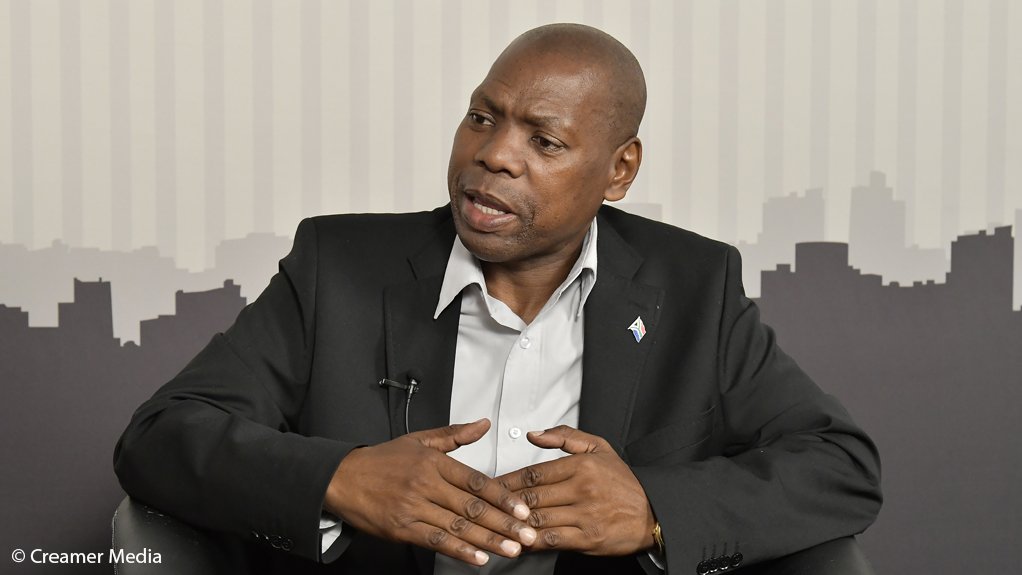
The Chairperson of the committee, Dr Zweli Mkhize, emphasised that Parliament has a constitutional obligation to fulfil both its legislative and oversight mandates. The committee therefore resolved, in principle, to adopt the proposed programme on a tentative basis, to proceed with stakeholder engagements, and to retain flexibility to revise the programme should the need arise.
The committee also received a briefing on the amendments made by the National Council of Provinces (NCOP) to the Independent Municipal Demarcation Authority Bill (IMDA Bill) of 2022. This Bill was tabled in the National Assembly on 21 June 2022 and seeks to repeal and replace the current Municipal Demarcation Act of 1998. The committee approved the Bill with one abstention.
Issued by the Parliamentary Communication Services on behalf of the chairperson of the Portfolio Committee on Cooperative Governance and Traditional Affairs, Dr Zweli Mkhize
EMAIL THIS ARTICLE SAVE THIS ARTICLE ARTICLE ENQUIRY FEEDBACK
To subscribe email subscriptions@creamermedia.co.za or click here
To advertise email advertising@creamermedia.co.za or click here

