





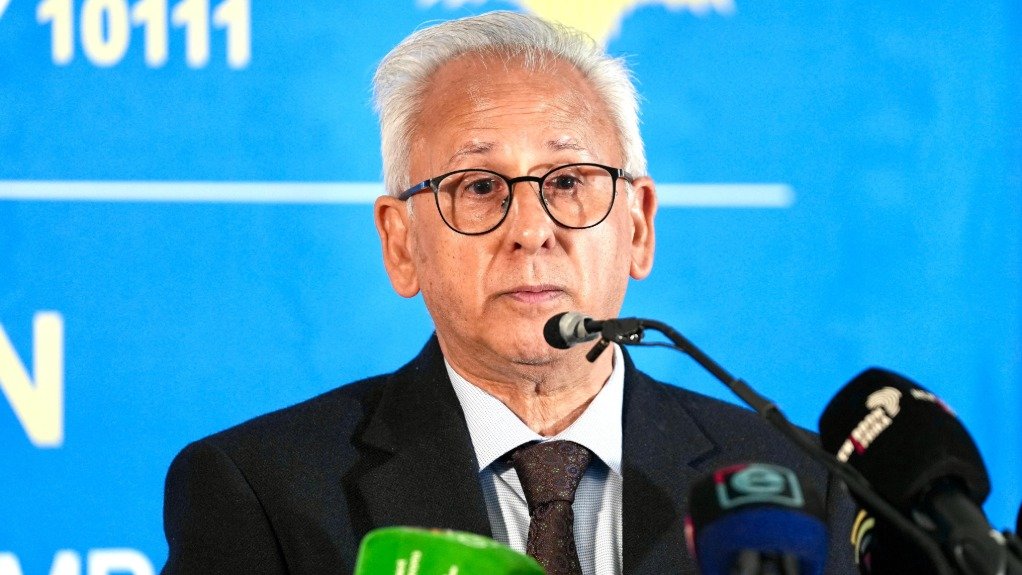

Releasing the long-delayed crime statistics on Friday, Acting Police Minister Firoz Cachalia said tackling organised crime and its associated corruption must be a national priority, expressing confidence in the ongoing Madlanga Commission of Inquiry, the Ad Hoc Commission, and the parliamentary enquiry.
Cachalia released the crime statistics for the first two quarters of the year, reflecting on crimes that occurred between April 2025 and June 2025; and July 2025 and September 2025.
During this period, he noted a decline in murders, with a 6.5% drop in the first quarter and an 11.5% drop in the second quarter.
Also during this period, 413 583 suspects were arrested, and 3 442 firearms were seized.
Cachalia highlighted the need for focused specialist capabilities with closer collaboration between the police, prosecutors, financial regulators, the South African Revenue Service, and the private sector.
“…we must follow the money and hit the criminals where it hurts in their pockets. We need fast, effective prosecutions and strong witness protection to turn investigations into convictions,” he stated.
Cachalia noted the importance of the Madlanga Commission and the parliamentary ad hoc enquiry for the future of criminal justice in the country.
“They are currently looking into allegations of criminal networks influencing elected political leaders along with the top ranks of the South African police service and their networks. We have seen the damage that State capture has done to our country and its institutions, and we now know that capture continues in different forms.
“An example is the large-scale theft of funds from the Gauteng Health Department affecting the Tembisa Hospital, and I worry that this may be the pattern elsewhere. These are the kinds of crimes that do not necessarily show up in the crime statistics,” Cachalia said.
He urged fast, effective prosecutions and strong witness protection to turn investigations into convictions.
He stressed that his focus was to professionalise the police service.
“…it speaks to the concerns we have in our society about political interference, about the abuse of political power, which has had a harmful effect on the functioning of the police service in this country,” he highlighted.
He also pointed to the need for whistleblower protection as part of the Saps’ focus going forward.
“I'm positive that both the Madlanga Commission, the Ad Hoc Commission, and the parliamentary enquiry, are going to help us establish a public record, a consensus in our society about what needs to be done going forward,” he said.
He assured that Saps would be strengthened internally, and that it was now partnering with the private sector.
IMPROVEMENTS
Meanwhile, he noted that the crime statistics show some improvement, highlighting a significant decline in most crime categories.
“Now, I know that given our concerns about crime, that result may come as a surprise, but I can indicate that the way in which stats are compiled in the South African Police Service meets the highest standards for statistical accuracy,” he said.
He noted a significant reduction in serious and violent crime, albeit remaining at high levels.
“Significantly, murder has started to decrease significantly, particularly in the last two years, and that is often a very good indicator of crime trends. If you track the murder rate, it does tell a story about violent crime in general. So, there was a period, I believe, in the first 15 years or so of our democratic transition, where the murder rate dramatic decreased,” he noted.
He expressed hope at the latest statistics, also pointing to double-digit reductions in most forms of robbery.
However, he acknowledged that there were categories that have remained stubbornly high.
Sexual offences and gender-based violence (GBV), and commercial crime, are continuing to record increases, a trend over the last five years, Cachalia said.
“…so, while we can take heart from the downward trends in violent crime, we can also say that the overall levels remain very high, or unacceptably high. So, this is not a time to rest,” he said.
INCONSISTENT AND CONTRADICTORY
The Democratic Alliance (DA) called on Saps to immediately release “full and disaggregated” GBV and child violence statistics, noting a discrepancy between Saps' categories.
The party pointed out that while there was a marginal decline in murders and attempted murders, violence affecting women and vulnerable groups was increasing and key information was missing.
“Even though Saps records crimes against children none were presented. Failing to release this data is a serious omission that prevents communities and Parliament from understanding the true scale of the crisis,” said DA spokesperson on Police Lisa Schickerling.
She explained that Saps’ contact sexual offences category reports only 170 to 196 cases, while rape statistics for the same period show 6 559 in first quarter and 7 204 in second quarter.
“This inconsistency raises a critical oversight question. If Saps reports two different sets of figures for sexual violence, which data stream should the public trust?,” she questioned.
The party called for accurate crime statistics.
“…they show where the problems are, guide where resources should go and expose failures so that action can be taken. Omitting child crime from the records leaves communities blind and vulnerable,” she argued.
EMAIL THIS ARTICLE SAVE THIS ARTICLE ARTICLE ENQUIRY FEEDBACK
To subscribe email subscriptions@creamermedia.co.za or click here
To advertise email advertising@creamermedia.co.za or click here

