





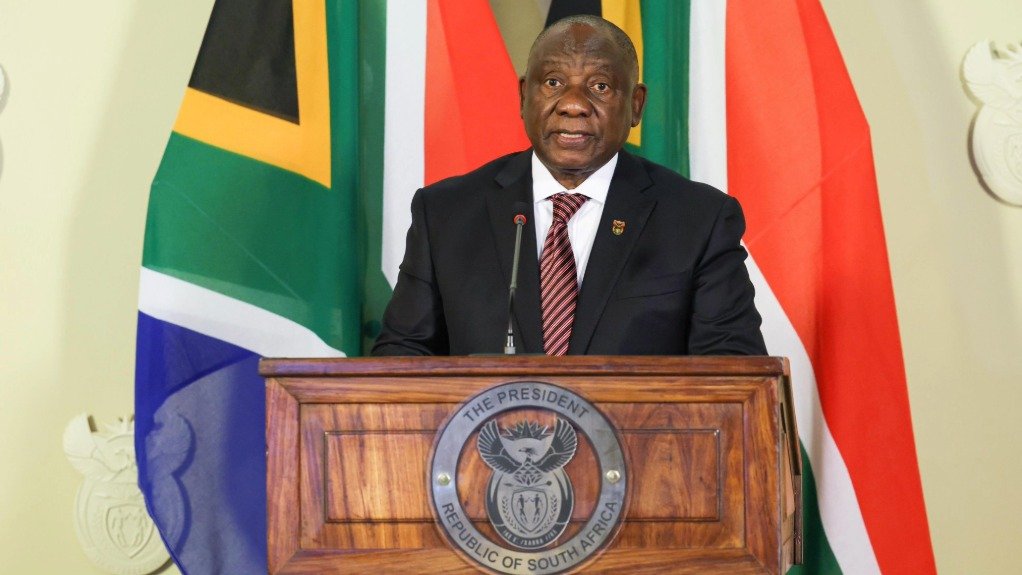
In his newsletter on March 2, commenting on the Budget delivered the week before, President Cyril Ramaphosa said that R19.2-billion will be reallocated over the medium term to the reform of electricity, water, sanitation and solid waste trading services in metros, with these allocations to be linked to performance against clear targets.
The Budget acknowledges that many municipalities are in financial distress, driven by weak revenue collection, poor management and substantial service delivery backlogs.
Many municipalities are not spending appropriately, with water and electricity revenue not invested in infrastructure maintenance or expansion over several years, but instead redirected to cover other municipal costs.
Local government finances have to be placed on a more sustainable footing to support the delivery of basic services with this Budget, he said.
The Municipal Infrastructure Grant is also being reformed to address underspending and the misuse of funds, he added.
Over the next three years, R86.9-billion has been allocated under this grant to support the provision of free basic services to indigent households.
Further, after interest payments, the social wage accounted for more than 60% of government spending for this financial year, which will enable the provision of healthcare services to 84% of the population and free basic services to more than 11-million indigent households, and the payment of social grants to 26.5-million beneficiaries.
This social wage allocation in the Budget will also support about 13.6-million learners at school, Ramaphosa said.
“Every allocation in the Budget is a developmental choice to ensure there are teachers in classrooms, nurses and doctors in clinics, electricity and basic services in homes and businesses, infrastructure to grow the economy and employment opportunities for communities.
“This Budget builds on the progress made over the last few years to stabilise, reform and transform our economy. Improvements in public finances, stabilising debt, a narrowing budget deficit, credit rating upgrades and improved market confidence all signal the beginning of an economic recovery,” he said.
The stabilisation of public finances provides space to accelerate public investment, sustain the social wage and direct resources to reforms that drive growth and job creation, he added.
“This year’s Budget focused on three imperatives, namely maintaining fiscal sustainability, driving inclusive growth and protecting society’s most vulnerable. It is a balanced budget that reflects the realities of our economy, limited financial resources, high unemployment and urgent infrastructure needs,” Ramaphosa said.
Effective infrastructure lowers the cost of doing business, raises productivity and supports exports.
R1-trillion in public spending has been allocated to infrastructure over the next three years to build and maintain roads and rail lines, expand energy infrastructure, and build and maintain water and sanitation infrastructure.
Yet, government cannot finance the full scale of infrastructure South Africa needs and is mobilising investment from private and other sources, as well as opening the space for public-private partnerships.
“We are maintaining State ownership of strategic national infrastructure,” said Ramaphosa.
“We will continue to be guided by fiscal discipline, structural reform, targeted investment and a commitment to improving the material conditions of every South African. A stable macroeconomic environment boosts investor confidence and increases government’s capacity to invest in growth and poverty relief without compromising sustainability,” he said.
Meanwhile, business organisation Business Leadership South Africa (BLSA) CEO Busisiwe Mavuso said the Budget delivered encouraging signals for business confidence and infrastructure investment.
While not addressing every challenge, it demonstrated continued fiscal discipline and improving infrastructure spending that should help unlock the private-sector investment South Africa needs, she said.
The fiscal trajectory is improving. Government is on track to deliver a primary surplus for the third consecutive year, meaning revenue exceeds non-interest spending. The debt-to-GDP ratio is stabilising and beginning to decline.
Tax collection performance remains strong, with the South African Revenue Service (Sars) exceeding revenue targets, and creates a foundation of macroeconomic stability.
This and many other signals in the Budget, including debt stabilisation, strong tax collection, advances in financial sector regulation and improved performance of State-owned enterprises, show how the quality of leadership in the public sector is translating into tangible progress, she said.
“This budget is all about holding people accountable for delivery, and government deserves credit for the improvements it has made, although much more remains to be done,” said Mavuso.
Further, National Treasury expects to show the first increase in infrastructure spending in several years this year, which will reverse a decade of decline that saw public sector investment fall from nearly 10% of GDP to below 5%.
Additionally, about 40% of the projected spending should come through State-owned enterprises, particularly Eskom and Transnet, whose improved financial performance enables infrastructure investment, rather than requiring bailouts, she added.
Treasury emphasises that spending is about ensuring money goes to growth-enhancing infrastructure with proper value for money and quality controls, she said.
“The focus on execution over volume is welcome. What matters is whether this R1-trillion translates into functional ports, reliable rail networks, adequate water infrastructure, and maintained municipal services, which are the basics businesses need to operate and expand.”
About two-thirds of BLSA's member companies are optimistic about the impact of reforms over the coming 12 months and three-quarters of them specifically credit electricity reforms for improving the business environment, Mavuso noted.
When employers and investors see government delivering on infrastructure commitments, such as ending loadshedding, concessioning ports, opening rail to private operators, they become willing to commit capital to expansion, she said.
“The virtuous cycle we are trying to trigger of fiscal credibility leading to improved confidence leading to increased investment leading to higher growth, depends on sustained infrastructure delivery.
“If the public sector can demonstrate reliable execution on the R340-billion allocated this year, if State-owned enterprises can deliver on their infrastructure mandates, if municipalities can show improvement in maintenance and basic service delivery, then private sector investment will follow. This year could be the one where the trend turns decisively,” she said.
However, important gaps remain in the Budget's approach to protecting the industrial base that generates much of the employment and tax revenue underpinning fiscal sustainability.
“The Budget offered no strategy to address deindustrialisation from cheap imports, which was devastating the automotive manufacturing and other sectors.
“Treasury also mentioned efforts with Sars to tackle illicit cigarettes, but provided no specific targets or resourcing details. There was also limited follow-through on the President's State of the Nation instruction to unbundle Eskom's transmission assets into the independent transmission system operator.”
Manufacturing capacity and infrastructure are interconnected. Reliable electricity and efficient logistics enable manufacturing competitiveness, while healthy manufacturers generate the tax revenue and economic activity that justify infrastructure investment.
The Budget addressed one side of this equation well but left the other largely untouched, she said.
On the whole, the Budget continued progress in the right direction. Fiscal discipline is being maintained, infrastructure spending is beginning to recover, and the foundations for improved business confidence are solidifying.
“The test now is implementation,” Mavuso said.
EMAIL THIS ARTICLE SAVE THIS ARTICLE ARTICLE ENQUIRY FEEDBACK
To subscribe email subscriptions@creamermedia.co.za or click here
To advertise email advertising@creamermedia.co.za or click here

