





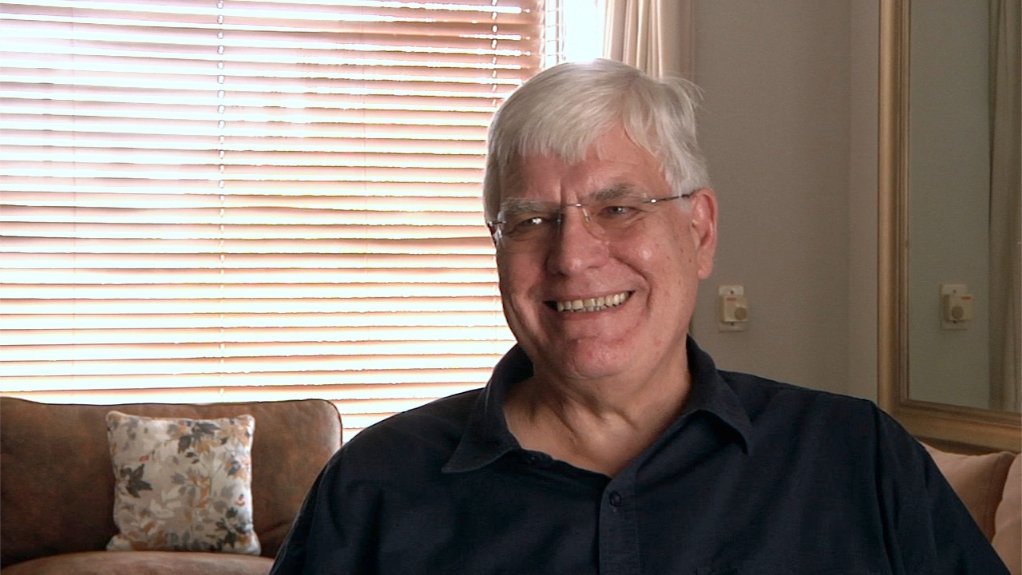

In December, a young entrepreneur from Pretoria, Adriaan Kruger, won $150 000 (about R2.5-million) in prize money at an African Business Heroes event in Rwanda. The event was organised by the Jack Ma Foundation and Alibaba Philanthropy. As readers will know, Jack Ma, a former teacher, is the founder of the Chinese internet giant Alibaba. Jack Ma attended the ceremony in person. The African Business Heroes competition is now in its 7th year and aims to foster innovation and support business entrepreneurs.
Last year there were 32 000 entries from 54 African countries. Competition is stiff, and the final rounds involve not just personal interviews and a presentation on the entrepreneur’s business, but also intense due diligence of the business, down to whether its tax affairs are in order!
Sadly, no South African media reported on the African Business Heroes and Kruger’s significant achievement. I thought it useful to tell the story here as an example of what can be achieved.
Identify the gap
In 2014, Adriaan Kruger, then an Oracle software specialist, and his close friend Abraham van Wyk, a medical professional, resigned their jobs and started a company called nuvoteQ (pronounced nuvotech).
Their business idea was to digitise the running of clinical trials on the African continent. To appreciate how they identified this gap, some background is needed.
Africa has 18% of the world’s population, carries roughly 25% of the global disease burden, yet receives only about 3% of global clinical research funding. Out of ten thousand projects a year, only about 300 are run in Africa. This is even more regrettable as Africa has a very large and diverse genetic pool. ‘Nobody can compete with us in (in) respect (of genetic diversity’), says Kruger. If you test a drug in Africa and it works here, chances are very high it will work very well in Scandinavia, China, South America, Japan, North America. If you test a drug only in Scandinavia, it may well be that people elsewhere metabolise the drug differently. The big medicine manufacturers and regulators are now realising this – they want to test and register drugs here.
In Europe and North America, clinical trials are conducted digitally, but in Africa they are still conducted manually. Data collection is on paper, errors are common, and regulatory processes are cumbersome, requiring stacks of forms. The problem is compounded by the fact that medical research is highly regulated, with very little room for error. The pharmaceutical industry is also risk averse. They default to running trials in North America or Europe, where processes are easier and less prone to errors.
The competition for the work they wanted to do – software companies – is also in America, Europe, or Asia. That is the opportunity they saw.
The business
One cannot simply build an app for clinical trials. Software used in drug development must meet strict standards set by regulators such as the US Food and Drug Administration (FDA) and the European Medicines Agency. Beyond the technology, the entire company must operate under formal quality-management systems (hence the Q in nuvoteQ). Today nuvoteQ is the only African company whose clinical trial software complies fully with both US and European regulators. This strict regulation creates a barrier to entry – what Warren Buffett would call a moat that protects the company.
nuvoteQ’s platforms digitise clinical trial processes end-to-end: patient data capture, validation, audit trails, compliance, and advanced analytics.
Its clinical research software is now used by universities, hospitals, contract research organisations, and pharmaceutical companies worldwide.
Earning trust the hard way
Kruger admits that, early on, they made mistakes: trying shortcuts, hiring too cheaply, and building systems that weren’t fit for purpose. They learned that there are no shortcuts in this industry. Also, as he says, nobody would ‘trust the software of two young guys from Pretoria’.
So, they rebuilt properly, raised early funding from respected figures in global clinical research, and hired top-tier talent: software engineers, medical doctors, statisticians, actuaries, and PhDs. Today 60 highly skilled people are employed, 35 in Gauteng, 10 in Cape Town, and the rest spread out in India, Brazil, Europe and Kenya. Highly qualified people do not come cheaply. Paying those 60 salaries every month is what keeps him awake at night. The R2.5-million prize money will come in handy.
The breakthrough came during Covid-19. Through partners in India, nuvoteQ’s Platform, called Nukleus, was selected to run one of the world’s largest Covid-19 vaccine trials, across more than 50 hospitals and thousands of patients. Many global regulators reviewed the data. The trial succeeded. Hundreds of millions of people ultimately received that vaccine.
From there on, credibility followed.
Today nuvoteQ’s software supports clinical trials across Africa, Europe, South America – all from Pretoria. Clients range from biotech startups that want to develop new drugs to global pharmaceutical firms. Most outsource clinical trials to specialist research organisations that use nuvoteQ’s software.
Making Africa work better
Beyond commercial work, Kruger and colleagues also established the not-for-profit nuvoteQ Foundation, focused on high-impact, Africa-centric projects. Much of the work is with national regulators to improve regulatory efficiency. The work is funded by international philanthropic organisations, including the Gates Foundation and the European and Developing Countries Clinical Trials Partnership (EDCTP).
Across Africa, more than 50 000 medicine registration dossiers, mostly for affordable generic drugs, are stuck in regulatory backlogs. As long as the generics are not registered, patients keep paying high prices for patented medicines that could be far cheaper. A diabetes pill that costs R5 could cost 50 cents instead.
SAHPRA, the South African Health Products Regulatory Authority, still follows inefficient processes, and a dossier of many, many pages must be submitted for registration. So nuvoteQ, through one of its subsidiaries called Scigenix, used a team of data scientists and pharmacologists to build a solution for them. The team make use of an open-source large language model from Meta, but based the servers in SA so that the data does not leave the country, and trained the model to read all the stacks of dossiers, including handwritten notes. It aims to go live in 2026. What takes the regulator, on average, 2 months to do can then be done in 45 minutes.
So What?
Kruger’s vision is simple. Clinical research is a $100-billion global industry. Africa receives about 3% of that value. If digitisation can help shift that to just 5%, the economic, skills, and healthcare benefits would be transformative.
Clinical trials leave behind infrastructure, laboratories, equipment and digital systems. They don’t just test medicine; they also train and build capacity. The benefits continue long after the trials are finished.
I really cannot do better than just quote Adriaan Kruger himself: ‘Standing next to Jack Ma on stage in Rwanda was one of the most profound moments of my life – not because of the spotlight, but because it validated something we’ve believed for years: Africa doesn’t need charity. It needs systems that work. And we’re building them.’
Written by JP Landman, Political & Trend Analyst
EMAIL THIS ARTICLE SAVE THIS ARTICLE ARTICLE ENQUIRY FEEDBACK
To subscribe email subscriptions@creamermedia.co.za or click here
To advertise email advertising@creamermedia.co.za or click here

