





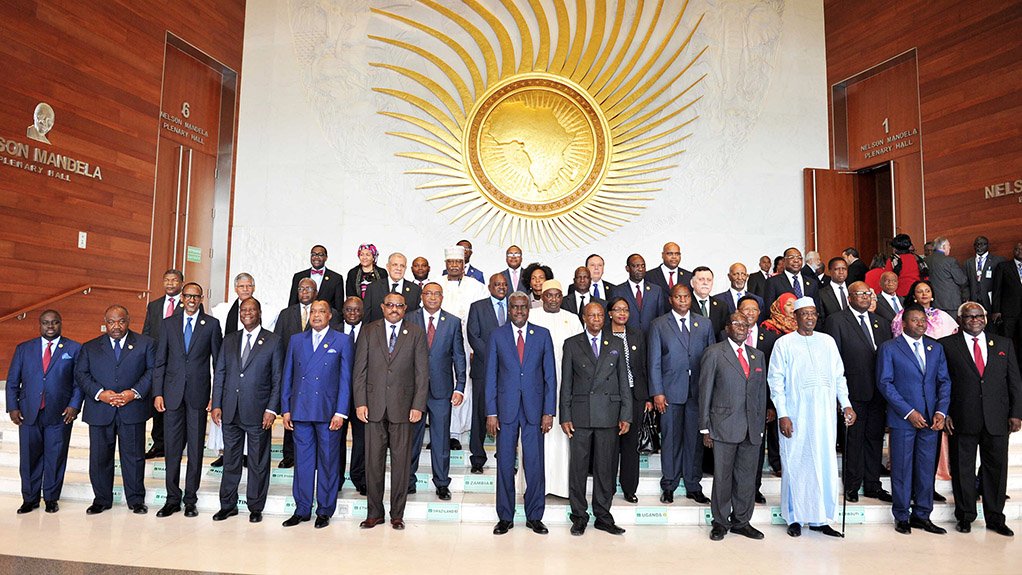
 The African Union held its
 Such gatherings, however, can feel distant from the everyday realities of African citizens. They are a showcase of high-level diplomacy that can feel far removed from public life.
Since the Union’s establishment in July 2002, the AU Assembly and the AU Executive Council (the meeting of ministers) have taken more than 2 000 decisions. Usually decisions are prepared by ambassadors to the African Union, and then adopted by the assembly or the executive council.
If one were to go by media reports, the AU would be largely seen as ineffective and irrelevant, a political project driven by elites who are detached from citizens in the 55 member states. But the reality is more multifaceted and complex.
In its 2000 Constitutive Act the AU aimed at becoming a union of and for African people. So have its decisions and processes translated into meaningful change for African people?
Very little is known about how African citizens think about the African Union. In 2025, Afrobarometer, a survey research network, polled thousands of respondents in 30 African countries. Of these, 57% said their country’s interests were recognised in continental affairs. But this doesn’t say anything about how they as citizens feel represented and served by the union. Further, an average of 55% of respondents thought that the AU’s economic and political influence on their own country was positive. This varied between 79% (Liberia) and 30% (Tunisia).
Following conflicts and power grabs across parts of the continent, criticism of the AU’s effectiveness is growing. This is particularly in the vital area of peace and security, which affects millions of people’s lives.
In my view as a researcher of the AU, and a long-standing observer and advisor on its political affairs, peace and security department, I would argue that the AU is making a difference for African citizens. I’ll highlight three areas that are not usually the focus of attention but that make my point.
These are climate change, governance and public health. In my view, these three stand out because each of them really shows how the continental organisation can make a difference for the people.
The AU in people’s lives
1. Climate change
The challenges arising from the consequences of climate change in Africa are enormous and can be observed in many parts of the continent. Just think of the torrential rains and floods in southern Africa in early 2026.
Climate mitigation and adaption are negotiated in global forums. This mainly happens at the annual Conference of the Parties (COP). This is the decision-making body of the United Nations Framework Convention on Climate Change.
Without a common African position – which is developed by the AU – citizens would have no chance of being heard internationally or have their interests addressed. The system is not perfect, but the AU empowers its member states and enables several African NGOs to come into these international processes.
2. Governance
The AU has opened and secured considerable legal opportunities for citizens in the area of governance through the establishment of several institutions and policies. These include the African Commission on Human and Peoples’ Rights (located in Gabon), the African Court on Human and Peoples’ Rights (Tanzania) and the African Peer Review Mechanism (South Africa). These structures allow African citizens to make legal claims. NGOs can shadow report on their governments’ submissions to these bodies. Additionally, civil society organisations can contribute to a country’s governance self-assessment.
In this way, the AU is a driving force in the further development of the rights of its citizens.
It is also driving the Africanisation of international law. This refers to development or co-production of international legal norms and standards.
What’s needed now is for member states to ratify existing legal provisions so citizens can reap the intended rewards.
3. Public health
The establishment of Africa Centres for Disease Control and Prevention (Africa CDC) following the Ebola epidemic in west Africa in 2014-2016 was a turning point for public health in Africa.
During the Covid-19 pandemic in 2020-2022, the Africa CDC enabled member countries to prepare their national health systems to respond better to the pandemic. This was done by, among other things, rolling out a response fund and providing access to health equipment. The gradual build-up of African vaccination capacity after the pandemic would hardly have been possible without a pan-African organisation.
The Africa CDC is now focusing on strengthening public health systems, and building and harmonising disease surveillance systems across countries. It is also developing and implementing emergency preparedness plans for a wide range of diseases, including malaria and tuberculosis.
These are just three out of many more examples that showcase the AU’s impact in everyday life. Others include policies around the free movement of people, free trade, women’s rights and infrastructure development.
These structures demonstrate the usefulness of an organisation that negotiates relations between Africa and the rest of the world, and that also exerts influence within the continent.
What if the AU didn’t exist?
The AU still struggles with numerous challenges, internal tensions and contradictions.
But in the end, member states are the ones that decide how efficient the organisation can be. They also decide how well financed it is to implement the many decisions that member states take at the AU Assembly or Executive Council sessions. Currently, member states’ contributions are capped at US$200-million, which was done to address the economic impacts of Covid-19 but has never been revised. This amount is less than 27% of the AU’s 2026 budget. The remainder is provided by the AU’s international partners, such as the European Union.
Still, the question of what would happen if the AU did not exist does not really arise. It is the body that represents a (particular) vision of pan-African unity and develops common African norms (such as on governance and women rights). It devises practical responses to specific challenges (like health, infrastructure and trade).
Without the AU, the continent would have weaker bargaining power and slower coordination around issues that touch on public life. It offers a way to give 55 countries a common voice in global politics, and to bring together often-conflicting national interests.
In an increasingly volatile global environment, the negotiating and decision-making power of the eight officially recognised regional economic communities alone would not be sufficient for this – even if it sometimes seems as if the distance between the AU headquarters in Addis Ababa and the people of the continent remains great.
Written by Ulf Engel, Professor, Institute of African Studies, University of Leipzig
This article is republished from The Conversation under a Creative Commons license. Read the original article.

